Kids, Teens & Families
Blue light glasses for teens and gaming
Quick answer
Most teenagers need a small adult frame rather than a kids' one, and they care a lot about how it looks. For school and gaming, a plain black or clear square with slim arms that sit under a headset covers both. Keep amber lenses as an at-home extra, not an everyday pair.
Should a teenager wear kids' or adult frames?
Adult frames, usually a smaller or medium size. Somewhere between about twelve and fourteen, most children outgrow a kids' frame, and a large children's frame tends to look young even when it technically fits.
The signs are easy to spot. The arms splay outward at the sides of the head, the frame looks narrow against the face, or the lenses sit too close together. Any of those means it is time to move up.
Most adult frames in our range are described as unisex fits, and a lot of them are light enough that a teenager will not notice them after a few minutes. If you have a kids' pair that fits, compare the width against an adult frame before ordering.
Why style decides whether they get worn
Because a teenager will not wear glasses they think look childish, however practical they are. That is the single biggest factor in whether a pair gets used or left in a drawer.
The answer is to let them choose. Plain black, clear and translucent grey are the colours that read as grown-up and neutral, and all three are perfectly sensible frames for school. A teenager who picked their own pair is also far more likely to look after it.
If you are paying and they are choosing, agree the budget first. Most of our everyday frames are under £12, which leaves room for a second pair if they want one for gaming.
What matters in glasses for gaming with a headset?
Slim, flat arms matter most. A headset presses the arms of a pair of glasses against the side of the head, so thick arms become uncomfortable quickly and the glasses come off.
After that, it is weight and grip. A light frame is less noticeable over a long session, and arms that stay put mean less adjusting mid-game. Our gaming range is built around those points.
- Slim, flat arms that slide under headset ear cups
- A light frame that stays unnoticed during long sessions
- Textured or grippy arms that do not slip
- Anti-glare lenses that cut reflections from lamps and RGB lighting
- Clear lenses if the same pair goes to school the next day
Clear or amber lenses for a teenage gamer?
Clear for everyday, amber only as an extra. Clear lenses keep colours looking normal, work at school, on video calls and on paper, and do not draw attention in class.
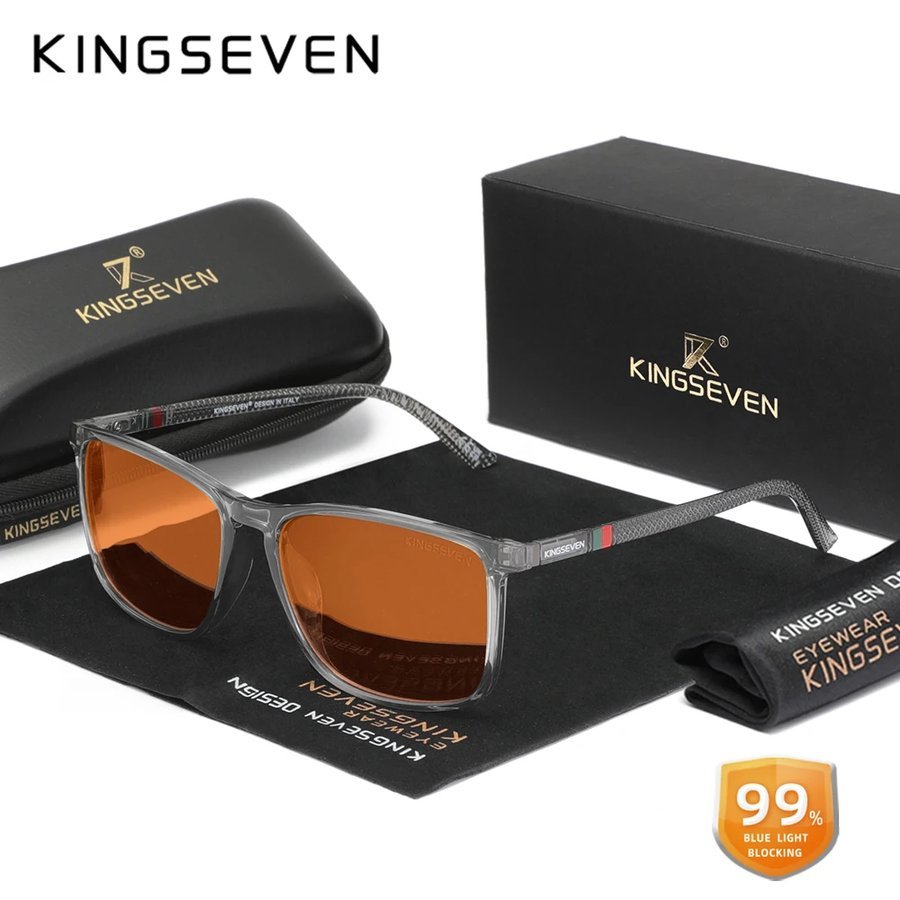
Amber lenses filter more blue light from screens than clear ones and give everything a warm tint. Plenty of gamers like the look and feel of that in a dim room, but the colour shift is obvious and does not suit schoolwork. The Amber Lens Gaming Glasses (£18.99) come with a zip hard case and cleaning cloths, which makes them easy to keep as a dedicated gaming pair.
If a teenager really wants the amber look, a sensible compromise is two pairs: a clear everyday frame that lives in the school bag, and an amber pair that stays next to the console. That keeps school mornings simple and means the gaming pair is always where it is needed.
Our guide to the best blue light glasses for gaming compares the options in more detail, and our post on PC gaming glasses for long sessions covers fit under a headset.
Which frames work for both school and gaming?
A plain square with slim arms is the easiest all-rounder. It reads as adult, suits most faces and fits under a headset.
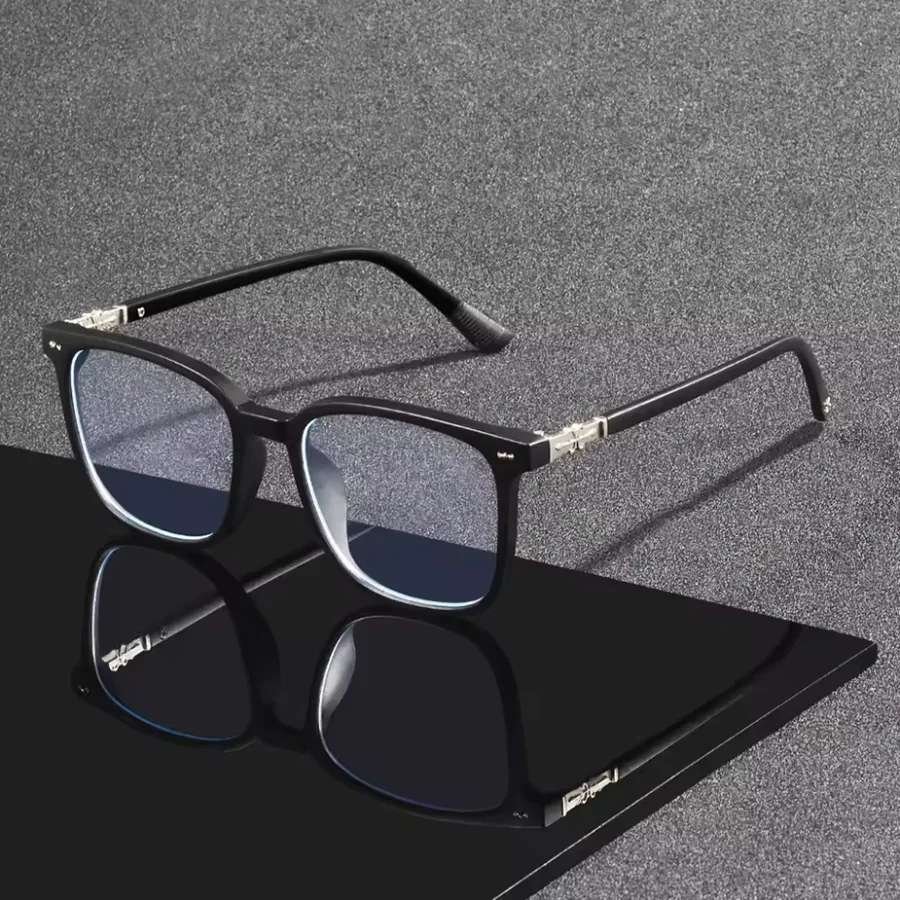
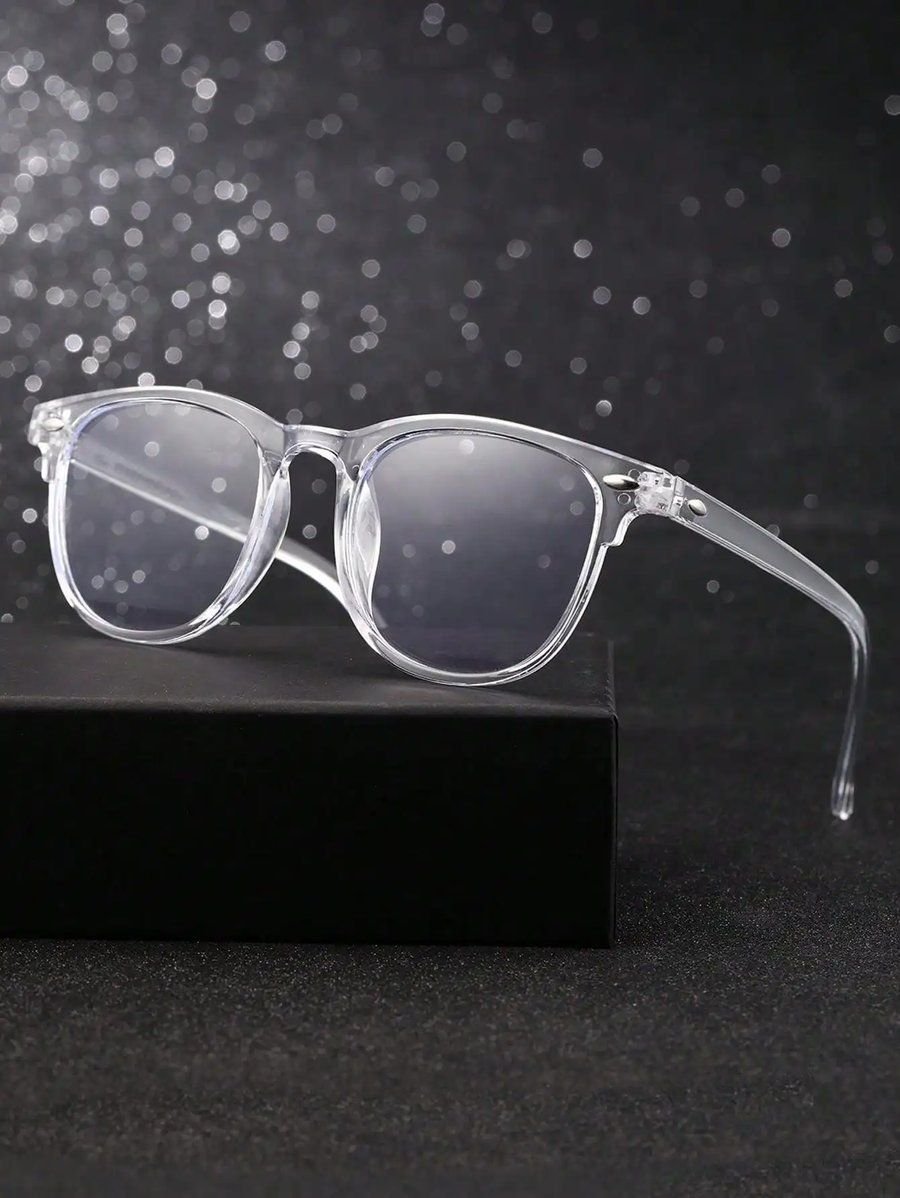
The Midnight Square (£9.99) is a matte black square with slim arms that sit comfortably under headsets, and it looks just as normal in a classroom. The Ice Clear (£9.99) is a fully transparent wayfarer style for teenagers who want their glasses to be barely noticeable.
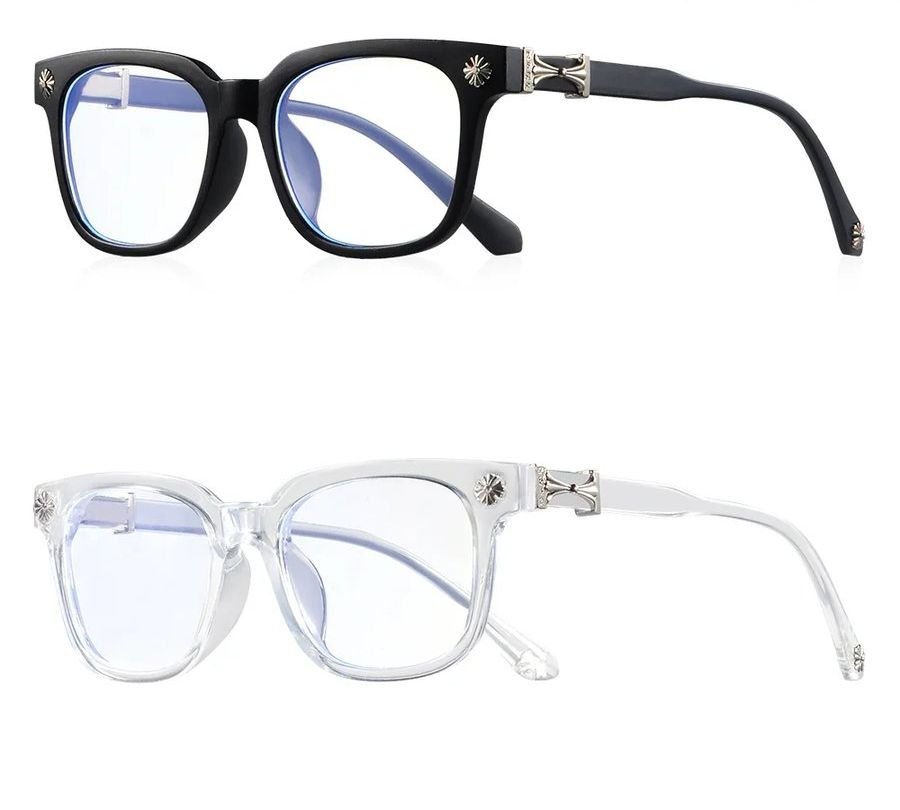
The Studio Square Twin Pack (£12.99) gives a matte black and a clear square in one order, which works neatly as one pair for the school bag and one for the desk at home.
How do families handle gaming time with teenagers?
By agreeing it together rather than imposing it. Teenagers are far more likely to stick to rules they helped set, and the conversation is easier before a problem than during one.
Families tend to find the practical rules are about when and where rather than exact minutes: homework before gaming, consoles in a shared room rather than a bedroom, headsets off at mealtimes, and a clear end time on school nights that everyone knows in advance.
Glasses have no role in that conversation. A pair makes the screen a little less glary to look at, and that is all. It is not a reason for longer sessions, and it is worth saying so if a teenager tries that argument.
Making a teenager's glasses last
A case, a cloth and a spare. A teenager's bag is no gentler than a younger child's, and most broken glasses are broken in a bag rather than on a face.
The habits are dull but they work. Glasses go in the case, not loose in a blazer pocket. They come off with two hands, not one pulled arm. And they never get left face down on a desk, where the lenses pick up scratches that no cloth will polish out. A teenager who paid part of the cost themselves tends to follow these rules without reminders.
Our post on cleaning and caring for your glasses covers the basics, and it is worth a teenager reading it themselves.
- Use a hard case every time the glasses go in a bag
- Clean lenses with a microfibre cloth, not a school jumper
- Take glasses off with both hands to keep the hinges straight
- Keep a spare pair at home if the budget allows
- Never leave them on a chair or under a controller
Not sure which frame they will like? Our Home Try-On sends up to four frames for seven days, free, so a teenager can decide at home without an audience.
Frequently asked
Are blue light glasses good for teenage gamers?
They can be a comfortable extra for gaming. The lenses filter blue light from screens and anti-glare coatings cut reflections from lamps and lighting. They do not change how long a session should be, which is a family decision.
When should a teenager move from kids' glasses to adult frames?
Usually somewhere between twelve and fourteen. Look for arms that splay outward, a frame that looks narrow against the face, or lenses that sit too close together.
Can you wear blue light glasses with a gaming headset?
Yes, as long as the arms are slim and flat. Thick arms get pressed against the head by the ear cups and quickly become uncomfortable, so choose a frame designed to sit under a headset.
Should teenagers wear amber or clear blue light glasses?
Clear lenses are the better everyday choice because they keep colours normal for school, paper and video calls. Amber lenses filter more blue light but tint everything warm, so they work best as a separate pair for gaming at home.
Can teenagers wear blue light glasses at school?
Most schools have no rule against clear non-prescription glasses, but it is worth checking your school's uniform policy. Clear lenses in a plain frame are the least likely to cause any question.
How much should I spend on a teenager's gaming glasses?
You do not need to spend much. Our plain squares start at £9.99 and our amber gaming pair is £18.99, and every order has a 30-day money-back guarantee with free returns.
Mentioned above
Frames from this guide
Kids, Teens & Families
More from this topic
Blue light glasses for kids: what parents should know
Kids' blue light glasses are child-sized frames with lenses that filter blue light from screens and cut glare. They are.
Read Kids, Teens & FamiliesManaging family screen time
Family screen time is easiest to manage with a few simple household agreements about where and when devices are used.
Read