FAQs, Care & Brand Comparisons
How to clean and care for your glasses
Quick answer
Rinse your glasses under lukewarm running water, rub both lenses gently with a drop of washing-up liquid, rinse again and dry with a clean microfibre cloth. Never dry-wipe a dusty lens, and keep household glass cleaner, alcohol wipes and paper towels well away from coated lenses.
What is the best way to clean glasses at home?
The best way is water first, a drop of washing-up liquid, then a microfibre cloth. It takes under a minute and it is the method opticians and lens makers broadly agree on, because it lifts grit off the lens before anything rubs against it.
Start by rinsing both sides of each lens under lukewarm running water. This step matters more than any other. Dust and grit sit on the surface, and if you wipe before rinsing you are dragging tiny hard particles across a very thin coating. Then put a small drop of plain washing-up liquid on your fingertip and work it gently over both surfaces of each lens, the nose pads, the bridge and the hinges, where skin oil builds up fastest.
Rinse everything thoroughly so no soap film is left behind, give the frame a light shake, and dry the lenses with a clean, dry microfibre cloth using light circular movements. Dry the frame with a separate corner of the cloth or a soft towel.
- Rinse both sides under lukewarm water first
- One small drop of plain washing-up liquid, fingertips only
- Clean nose pads and hinges as well as the lenses
- Rinse off all soap, shake gently
- Dry with a clean microfibre cloth
What should you never use on coated lenses?
Avoid anything abrasive or anything containing alcohol, ammonia, bleach or vinegar. Those are the two ways people wear out a lens coating early: rubbing grit into it, or softening it with the wrong chemical.
Household glass and window cleaners are the classic mistake, because the label promises a streak-free finish. Many contain ammonia or alcohol, which can cloud or craze an anti-glare coating over time. Alcohol wipes from a first-aid kit fall into the same group. Hand gel is no better.
On the physical side, tissues, kitchen roll, napkins and shirt tails all feel soft but are rough at the scale of a lens coating, and clothing carries whatever lint and grit it picked up during the day. Saliva is also a bad idea: it spreads oil around rather than lifting it.
- Household glass or window cleaner
- Alcohol wipes, surgical spirit or hand gel
- Paper towels, tissues and napkins
- Your shirt, jumper or scarf
- Very hot water from the kettle or tap
How do you look after a microfibre cloth?
Wash it regularly, because a dirty cloth is just a smear spreader. Microfibre works by trapping oil and dust in its fibres, so once those fibres are loaded the cloth stops cleaning and starts moving grime around.
Hand wash the cloth in warm soapy water, or put it through the machine with other light items. Skip the fabric conditioner, which coats the fibres and leaves streaks on the lens next time you use it. Let it air dry rather than tumble drying on high heat.
It also helps to own several cloths. Keep one at your desk, one in your bag and one with the case. The most common reason people dry-wipe with a sleeve is simply that the proper cloth is in another room. Several of our frames, including the Slate Square and the Amber Lens Gaming Glasses, come with a case and cleaning cloths in the box.
Are lens cleaning sprays and wipes safe?
Sprays and wipes made specifically for coated spectacle lenses are generally fine, as long as the label says they are suitable for anti-glare or anti-reflective coatings. They are handy when you are away from a sink.
Read the ingredients before you buy. Some cheap wipes are really alcohol wipes with a different label. Even with a good spray, rinse or blow off loose dust first if you can, then spray, then wipe with a clean microfibre cloth. Think of sprays and wipes as the travel option and soap and water as the proper clean you do at home.
How should you store glasses to avoid scratches?
Store them in a hard case, folded, with nothing else inside. Most scratches do not happen during cleaning at all; they happen in pockets and bags, where lenses rub against keys, coins, zips and phone edges.
At home or at your desk, put your glasses down with the lenses facing up and the arms folded, never lens-down on a table. Avoid hanging them from the neck of a jumper where they swing into things, and do not push them up onto your head, which stretches the arms and loosens the fit over a few weeks.
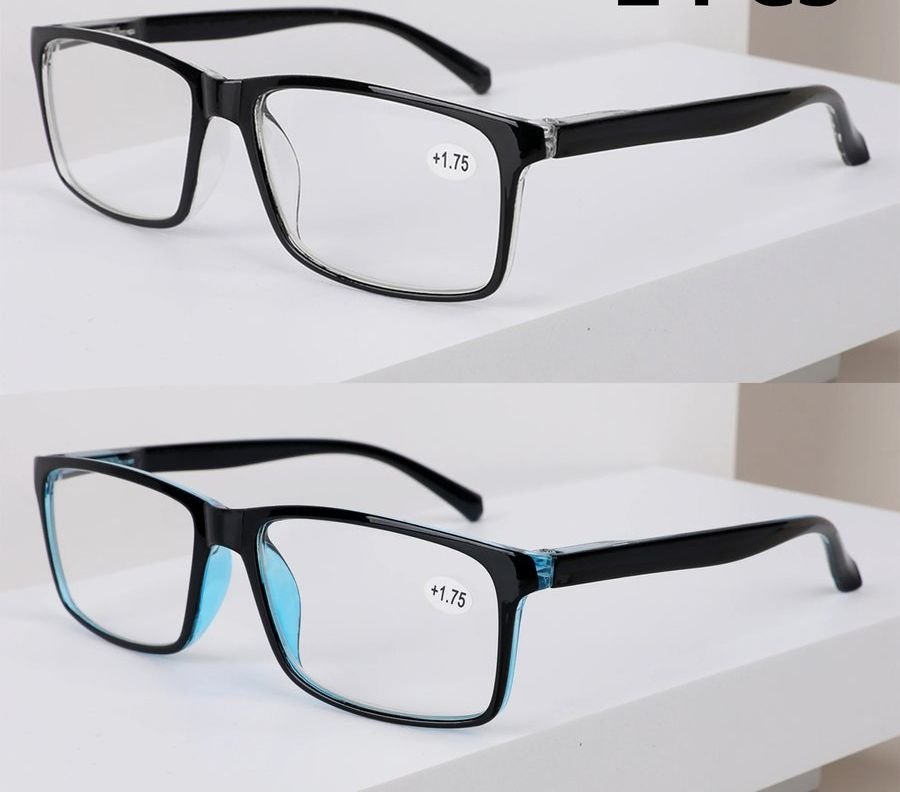
If you have more than one pair, keep a cheap spare wherever you tend to need glasses in a hurry. A twin pack such as the Everyday Readers Twin Pack means the good pair stays in its case.
Why does heat matter for frames and lenses?
Heat can warp frames and craze lens coatings, so keep glasses away from anything hot. Acetate and plastic frames soften when warm and can set in a new shape, and a coating expands at a different rate from the lens underneath it, which can leave a fine web of cracks.
The usual culprits are a car dashboard or parcel shelf on a sunny day, a radiator or windowsill above one, a sauna or steam room, and a hot hair dryer when you are drying your hair with your glasses on the counter beside you. Cleaning with very hot water carries the same risk, which is why lukewarm is the rule.
How do you keep the fit and hinges in good shape?
Take glasses off with both hands and check the screws every few months. One-handed removal pulls a single arm outwards and slowly bends the frame out of line, so the pair sits crooked and slides down your nose.
If the hinges feel loose, a small optical screwdriver from a repair kit will tighten them; turn gently and stop as soon as there is resistance. Spring hinges, found on many of our reading glasses, flex outwards to take the stress of daily wear, but they still benefit from two-handed handling. If a frame has bent badly or a lens has popped out, it is usually better to replace the pair than to force it back.
If you are shopping for a replacement, our full blue light glasses range is dispatched within 48 hours with free UK delivery over £20. More care questions are answered in our FAQs and care guide.
Frequently asked
Can I use Windex or glass cleaner on my glasses?
No. Household glass cleaners often contain ammonia or alcohol, which can cloud or break down an anti-glare coating over time. Use lukewarm water, a drop of washing-up liquid and a microfibre cloth instead.
Is it OK to clean glasses with washing-up liquid?
Yes, a small drop of plain washing-up liquid is one of the best ways to clean glasses. Choose one without added hand creams or lotions, rinse the lenses thoroughly afterwards and dry them with a clean microfibre cloth.
Why are my glasses still smeary after cleaning?
The usual causes are a dirty microfibre cloth, soap left on the lens, or fabric conditioner in the cloth. Wash the cloth, rinse the lenses more thoroughly and dry with light circular movements.
Can you remove scratches from glasses lenses?
Not reliably. Scratch removal pastes and toothpaste tricks tend to strip the coating and make the lens look worse. Once a coated lens is scratched in your line of sight, the practical fix is a new pair.
How often should I clean my glasses?
Most people benefit from a proper soap-and-water clean once a day, plus a quick rinse and wipe whenever the lenses look smeared. Wash your microfibre cloth every week or two.
Are alcohol wipes safe for glasses?
General alcohol wipes are best avoided on coated lenses because alcohol can wear the coating over time. If you want wipes for travel, pick ones labelled as suitable for anti-reflective coatings.
Mentioned above
Frames from this guide


FAQs, Care & Brand Comparisons
More from this topic
Are Specsavers blue light glasses worth it?
Specsavers-style optician chains are worth it when you need a sight test and prescription lenses made and fitted in.
Read FAQs, Care & Brand ComparisonsBoots blue light glasses: what is on offer
Boots operates as both an optician and a high street pharmacy retailer, so there are two routes: lens options.
Read