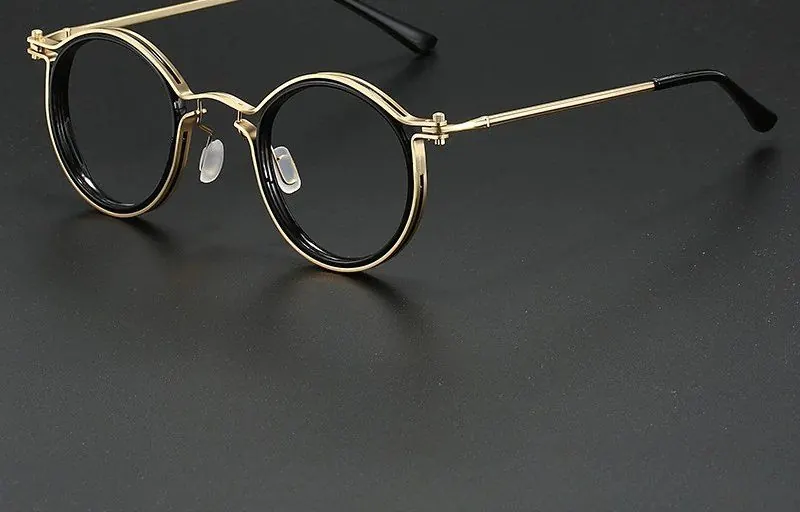
FAQs, Care & Brand Comparisons
Glasses with Blue Light Filter: FAQs and Care Guide
Quick answer
Glasses with a blue light filter cut out a portion of the blue-violet light from screens, and an anti-reflective coating removes much of the mirror glare, so the picture looks slightly warmer and cleaner. Most lenses look near clear. Size them by the three millimetre numbers inside the arm of a pair you already wear.
Right, let's sort this out. Nine years behind a counter in Leicester taught me that the same handful of questions come up again and again, usually somewhere between "do these make my nose look big" and "how do I stop them going smeary". So here is the plain-English answer to all of it: what glasses with blue light filter actually do, how to get the size right when you cannot try them on, and how to keep them clean without wrecking the lenses.
Let me save you the guesswork.
What glasses with blue light filter lenses actually do
A blue light filter lens filters out a portion of the blue-violet light your screens, LED lights and the sun give off. Pair it with an anti-reflective coating and you also lose a lot of the mirror-glare bouncing back from a window or a lamp. On screen, whites can read a touch warmer and softer.
Think of the way sunglasses cut the brightness of a bright day without curing the sun. Same principle, aimed at the light off your devices. That is the whole job. They are not magic, they do not replace an eye test, and they make no promises beyond the light and the look.
Will they have a tint?
Usually a very subtle one, if any. Many blue light filters are built into the coating, so the lens looks close to clear and most people stop noticing within minutes. It is nowhere near the bright orange of the old specialist frames.
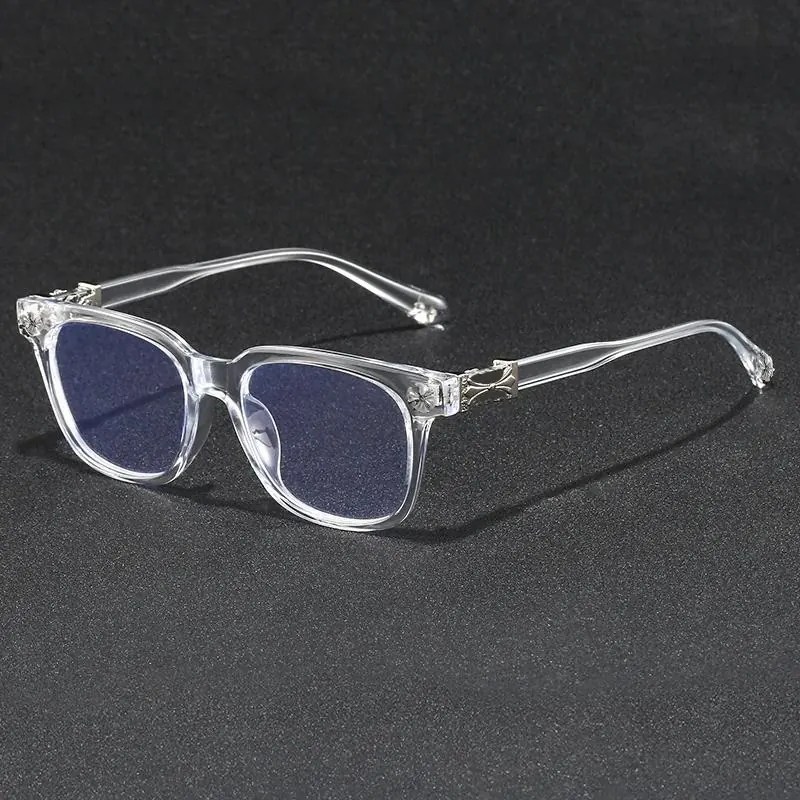
Some frames go deliberately warmer. A tinted lens filters a little more of the blue end and gives that cosy amber look, but the honest trade-off is colour: whites lean cream and accuracy slips. Lovely for casual evening screen time, less ideal if you are editing photos. If you want near-clear, plenty of our lenses are, including a straightforward pick like the Crystal Clear frames.
How to get the size right online
This is where most disappointment comes from, and it is entirely avoidable. Glasses carry three numbers, printed on the inside of the arm, all in millimetres:
- Lens width (roughly the width of one lens)
- Bridge width (the gap that sits over your nose)
- Arm length (temple to behind the ear)
For example, 50-18-140. Find a pair you already wear happily, read its three numbers, and match them to the product measurements. That single trick gets you closer than any amount of squinting at photos.
No glasses to copy? Stand at a mirror with a ruler. Measure your face temple to temple for a rough frame width; most sit between 120 and 145mm. Do not agonise over exactness. It is like clothes sizes, you just want the right ballpark.
Getting the fit comfortable
Size is half of it. Fit is the rest.
The bridge does most of the work. On plastic frames it should match the curve of your nose and sit flush without pinching. If your glasses forever slide down, nine times out of ten the bridge is too wide. Metal frames usually have adjustable nose pads, so you can gently tweak them for a pressure-free fit.
The arms should reach past your ears and curve gently around the back without digging in. Too short and they perch high and pinch; too long and they lose their grip.
The shake test settles it. Pop them on, give your head a small shake, and see if they stay put without feeling tight. Steady and comfortable means you have chosen well.
If you are weighing up shapes as well as sizes, my frame shapes guide covers which frames suit which face, and the complete buyer's guide walks through lenses and materials.
Priya's care routine
I have seen people clean their lenses with a shirt hem, a paper towel, even spit. Your glasses deserve better, and proper care keeps them clear for years. Here is the five-step version.
- Rinse first, always. Run them under cool or lukewarm water before you wipe. This washes off the grit that would otherwise scratch the lens. You would not dry-wipe sand off a car.
- A drop of mild soap if greasy. Fingerprints are inevitable. A tiny bit of lotion-free washing-up liquid, worked into a lather and rinsed off, shifts the grease. Avoid anything with moisturisers or grit.
- Shake off the water. A gentle shake beats rubbing, and it heads off water spots.
- Dry with a clean microfibre cloth. Lint-free and soft, it wipes streak-free. Never paper towels, tissues or clothing, all quietly abrasive.
- Store them in a case. A hard case saves lenses from scratches and frames from being sat on. Lenses-up on a flat surface if there is no case to hand.
What not to do: no saliva, no window cleaner or ammonia, no dry-wiping, and no frayed cloths. Wash your microfibre cloths now and then, skipping the fabric softener, which leaves a residue.
| Care task | How often | How |
|---|---|---|
| Rinse and dry lenses | Daily | Cool water, then a clean microfibre cloth |
| Degrease with mild soap | Weekly, or when smeary | A drop of lotion-free washing-up liquid, rinsed well |
| Wash the microfibre cloth | Every week or two | Warm wash, no fabric softener |
| Check screws and nose pads | Monthly | Tighten gently, adjust the fit if they slip |
| Store in a hard case | Every night | Lenses up on a flat surface if no case is to hand |
Are all blue light glasses the same?
Not at all. Filter strength varies, some built into the lens and some coated on. Tint level varies. Frame quality varies a lot, from featherlight metals to solid tortoiseshell acetate, and better lenses simply give clearer, more consistent results. Consumer champion Which? is a sound guide when you are judging build quality. Decide what matters most to you, a near-clear look, a particular shape, or all-day comfort, then shop to that. The full blue light glasses collection and the women's range give you room to compare.
One last, sensible note that is nothing to do with the glasses: the College of Optometrists suggests setting your screen at a comfortable brightness and about an arm's length away, and stepping away from the desk now and then. Good working habits that pair nicely with a good pair of frames.
Take care of them, get the size right, and glasses with blue light filter will serve you well for years.
FAQs
What do glasses with a blue light filter do? They filter out a portion of the blue-violet light from screens and other light sources, and with an anti-reflective coating they cut glare too, so the picture looks slightly warmer and cleaner. They are a comfort-and-style accessory, not a medical device.
How do I know what size to buy online? Read the three numbers on the inside arm of a pair you already wear comfortably: lens width, bridge width and arm length in millimetres. Match those to the product measurements and you will be close.
How should I clean them? Rinse under cool water first, add a drop of lotion-free washing-up liquid if they are greasy, rinse, then dry with a clean microfibre cloth. Avoid paper towels, clothing and harsh chemicals, which scratch lenses or strip coatings.
How can I test whether glasses have a blue light filter? Hold the lens over a white screen or paper: a filtering lens usually shows a faint yellow cast against pure white, and its surface reflections often look faintly blue or purple under light. Beyond that home check, the product specification is the reliable source, so buy from sellers who publish it.
Can I wear blue light glasses all the time? Yes. Non-prescription blue light lenses are ordinary lenses with a filter, so there is no rule about taking them off. Plenty of people wear one pair from breakfast to bedtime because the near-clear tint barely shows. The only real consideration is comfort, which comes back to weight and fit.
About the author Priya Sundaram - Turning screen fatigue into frame confidence Priya spent nine years as an optical dispensing assistant on a busy Leicester high street before moving into ecommerce content, so she has fitted thousands of frames to real faces. She now writes full-time about eyewear and spends her evenings testing new styles on her long-suffering family. She still can't walk past a mirror without adjusting someone's glasses. Writing for The Blue Light Glasses Co..
Frequently asked
How should I clean blue light glasses?
Rinse under lukewarm water first to remove grit, add a drop of washing-up liquid, rub gently with your fingertips, rinse and dry with a clean microfibre cloth. Dry wiping is what scratches an anti-glare coating.
Can I use glass cleaner on my glasses?
No. Household glass cleaners typically contain ammonia or alcohol, both of which degrade anti-glare coatings. Washing-up liquid and lukewarm water is the correct product, and it costs nothing.
Is anti-glare the same as anti-reflective?
Yes. Anti-glare, anti-reflective and AR all describe the same multi-layer coating that stops light bouncing off the lens surface. Retailers use the terms interchangeably and there is no technical distinction.
Do I need a prescription for blue light glasses?
No, not for non-prescription pairs - the lenses have no optical power, so anyone can wear them. You only need a prescription if you also need vision correction, in which case the filter goes onto your prescription lenses.
Mentioned above
Frames from this guide
FAQs, Care & Brand Comparisons
Keep reading
Deeper guides in this topic, with new ones publishing every Monday, Wednesday and Friday.