Right, deep breaths everyone. Remember that time you finally got the kids to bed, poured yourself a cuppa, and sat down to five minutes of peace… only to hear "Muuuum! My tablet's run out!" from upstairs? (Happened last night, actually. Leo, my eldest, has a sixth sense for when I’m about to relax.) It’s the soundtrack to modern parenting, isn’t it? The constant hum of screens, the negotiation tactics worthy of a UN diplomat, and the endless wondering: "Am I doing this right?"

If you’re anything like me – a mum of three from Leeds who’s spent more years than I care to count navigating the digital playground with small humans – then you've probably had a thought or two about blue light glasses for your children. Maybe you’ve seen them pop up online, or a friend mentioned them, and now you’re pondering: "Are these just another bit of kit to add to the already overflowing school bag, or could they actually be, you know, useful?"

Let's be honest, we all live on screens these days. Our kids? Even more so. From educational apps and homework to gaming with friends and watching their favourite YouTubers, screens are woven into the fabric of their lives. And while we might yearn for the days of climbing trees and building dens (my middle one, Evie, still loves a good den, bless her), the reality is that the digital world is here to stay. So, how do we equip our kids to navigate it comfortably? That’s where the conversation about blue light glasses kidswear comes in.

This isn’t about scaremongering, or adding more pressure to your already overflowing plate. This is about practical, real-world solutions for real families. As a former teaching assistant, I’ve seen first-hand how much time kids spend looking at tablets, interactive whiteboards, and computers. As a mum, I’ve negotiated enough homework-and-tablet standoffs to last a lifetime. So, let’s unpick this together, shall we? No faff, just honest chat from one parent to another.

What Are Blue Light Glasses, Anyway? (And What They Aren't)

Before we dive too deep, let’s get our heads around what we’re actually talking about. Blue light glasses – sometimes called computer glasses or screen glasses – are specifically designed with lenses that can make screen time feel a little... softer.

Think of it like this: all light has different colours, and blue light is a part of the visible light spectrum. It’s naturally present in sunlight, which is great for telling our bodies it’s daytime. But it’s also emitted by our digital screens – phones, tablets, laptops, TVs – the very things our kids spend hours interacting with.

The idea behind blue light glasses is that they have a special coating on the lenses which affects how much of that specific blue light reaches the eye. This isn't a medical treatment, and they don't block all blue light. Instead, they’re designed to filter a portion of it.

**Crucially, here's what they aren't:** They are not a medical device. They don't 'cure' anything, and they won't stop your child needing their regular eye checks. They're a bit like wearing sunglasses on a bright day – they make things feel a bit more comfortable, but they don't replace proper eye care from a professional. Think of them as a useful accessory, part of a holistic approach to managing screen time, not a magic bullet. We're talking comfort and style for their digital life, not a health claim.

The Screen Time Reality for Our Little Digital Natives

Let’s be honest, screens are everywhere. From the moment my youngest, Alfie, wakes up asking for "Paw Patrol" on the TV (yes, I give in sometimes, don’t judge!), to Leo doing his maths homework on the laptop, or Evie Facetiming her grandparents, digital devices are part of our everyday rhythm. And it’s not just for play anymore. Schools are increasingly digital, with tablets used in classrooms, online homework platforms, and virtual learning days becoming standard.

According to research by Ofcom, children spend a significant chunk of their day online. In 2023, children aged 5-7 spent over 2.5 hours online daily, rising to nearly 4 hours for 8-11s, and a whopping 5 hours for 12-17s. That’s a lot of screen time, and it’s a trend that’s unlikely to reverse.

When I was a teaching assistant, I saw children hunched over tablets for reading tasks, squinting at interactive whiteboards, and diligently typing away on computer projects. And when they got home? More screens! Gaming consoles, YouTube videos, TikTok dances… it’s a whole digital ecosystem out there.

We can't just wish screens away. They’re a tool for learning, connection, and entertainment. Our job as parents, then, isn't to eliminate them (as tempting as that sometimes feels after a particularly intense Roblox session), but to help our children navigate this digital world in the best way possible. And that's where thinking about blue light glasses kidswear can become part of the conversation.

Why Consider Blue Light Glasses for Your Kids? (Beyond the Buzzwords)

So, if they're not a medical device, why bother? This is the question I asked myself, believe me. And the answer, for me, comes down to comfort and creating good habits.

  1. A Little Bit of Everyday Comfort: You know how sometimes after a long day staring at your own screen for work (or, let’s be real, scrolling through Instagram), your eyes just feel a bit... tired? Kids experience this too. While we can't make medical claims, many people report that filtering some blue light just makes their screen time feel more comfortable. It can take the edge off the intense brightness of screens, making the viewing experience less harsh. My own kids, especially Leo during his marathon gaming sessions, say things look "less bright" or "calmer" with them on. And if they feel a bit more comfortable, isn't that a win?
  1. Part of a 'Screen Time Toolkit': I'm a big believer in giving kids tools and routines. Just like we teach them to brush their teeth, wash their hands, or put on a coat before going outside, we can integrate helpful habits around screen use. Suggesting they pop on their blue light glasses when they're settling down for homework or a gaming session can be a subtle signal. It says, "Okay, we're engaging with screens now, let's do it mindfully." It’s about creating an association, a routine, rather than just passively staring at a glowing rectangle.
  1. Encouraging Breaks (Seriously!): One of the biggest challenges with screens is that kids (and adults!) can get totally absorbed. When I suggest my kids put their glasses on, it often leads to a natural pause. It's a moment to remind them, "Remember to take breaks, darling! Look out the window for a bit, or grab a drink." It’s a small prompt that can lead to bigger, healthier screen habits.
  1. A Gentle Nudge Towards Screen Awareness: By introducing blue light glasses, we're implicitly telling our kids that screens are powerful. They’re fantastic, but they also require a bit of thought and management. It opens up a conversation: "Why do you wear these, Mum?" (Yes, I have my own pair, and yes, I absolutely link to our grown-up range later!). This is an opportunity to talk about balance, about other activities, and about listening to their bodies.
  1. Durability and Style: Let’s face it, if kids aren't keen on wearing something, they simply won't. This isn’t a sales pitch, it’s just the truth! If you’re considering them, you'll want something that can withstand the rough and tumble of kid life and that they actually want to wear.

If you’re thinking this sounds like a sensible addition to your family’s digital toolkit, then you’ll want to check out some options. You can find a great selection of durable and stylish options for all ages, including some fantastic Kids' Blue Light Glasses, that tick all the boxes.

Finding the Perfect Pair: What to Look for in Kids' Blue Light Glasses

Okay, so you’re on board with the idea. Now comes the fun part (or the faffy part, depending on your kids' current mood): choosing a pair! This isn't like buying a new school uniform; there’s a bit more wiggle room for personality, but also some key practicalities.

1. Durability: Built to Last (the School Year, at Least!)

My eldest, Leo, once tried to use his reading glasses (a different story for another day!) as a catapult for a dried pea. Let’s just say they didn’t survive the ordeal. Kids are, by nature, little chaos agents. They drop things, sit on things, leave things in strange places. So, when it comes to any accessory, durability is paramount.

  • Flexible Frames: Look for frames made from materials like TR90 (a thermoplastic material) or silicone. These are brilliant because they’re incredibly flexible and resistant to bending and snapping. This means they can withstand being pulled, twisted, and yes, occasionally sat on, far better than rigid plastic or metal frames. (Believe me, I've tested this with Alfie!)
  • Robust Hinges: The hinges are often the first point of failure. Spring hinges are a good shout as they offer more give and can prevent frames from snapping when pushed too far.

2. Comfort: If It Doesn't Feel Good, They Won't Wear It

Even the coolest-looking frames will end up forgotten in a drawer if they’re uncomfortable.

  • Lightweight: Kids don’t want heavy frames sliding down their noses. Choose lightweight materials that won’t put pressure on their face.
  • Good Fit: This is crucial. The glasses shouldn't be too wide that they slip off, or too narrow that they pinch. The arms should extend comfortably to hook over their ears without digging in. Many brands offer different sizes, so check the measurements against your child’s face (a quick measure with a ruler can save a lot of hassle!).
  • Nose Pads: Some frames have soft, integrated nose pads that help distribute weight and prevent slipping, which is great for active kids.

3. Style: Let Them Be Part of the Choice!

This is where the 'kidswear' part of blue light glasses kidswear really comes into its own. If your child likes how their glasses look, they’re far more likely to wear them.

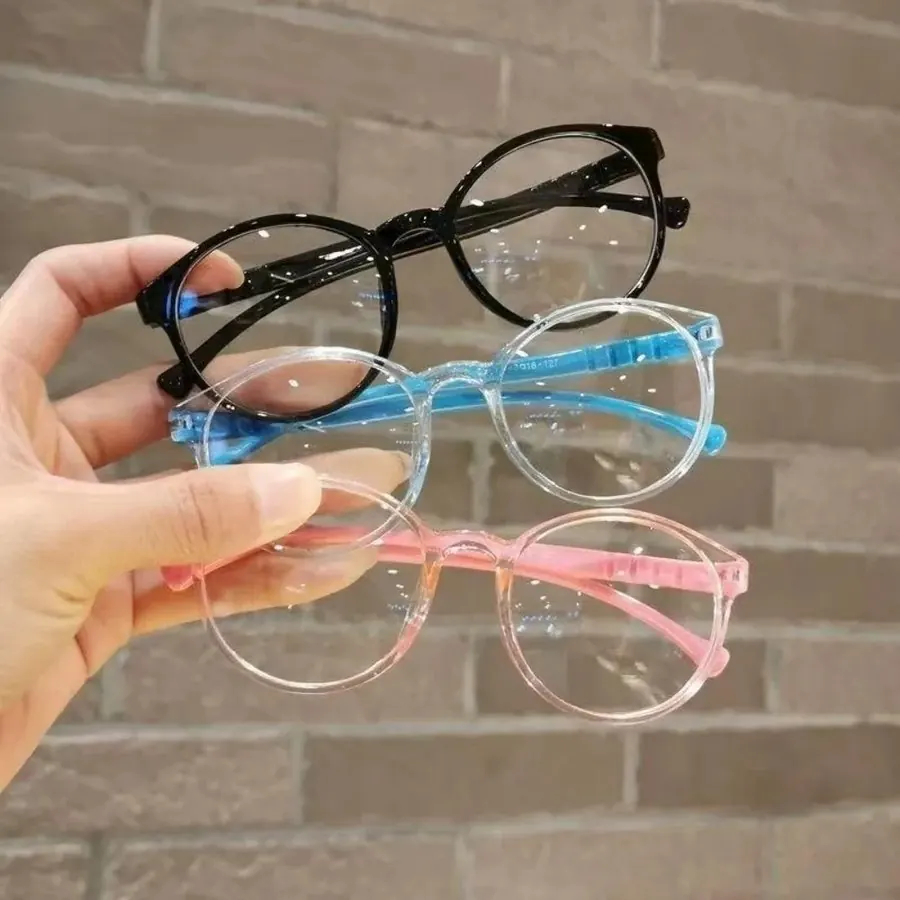
  • Colour & Design: Kids have opinions! Let them pick their favourite colour or a fun style. You might be surprised by what they gravitate towards. Evie, my middle one, is obsessed with anything pastel, so a subtle pink or lilac frame would be a winner for her. Leo, on the other hand, prefers cool blues or classic black.
  • Shape: From classic rectangular to rounder, more playful shapes, there's a huge variety. Let them try a few on (even virtually!) to see what suits their face and personality.

4. Lens Quality: Clarity is Key

While we're not making medical claims, the quality of the lens itself is important for comfortable viewing.

  • Clarity: Make sure the lenses offer clear, undistorted vision.
  • Anti-Glare Coating: Many blue light glasses come with an anti-glare (anti-reflective) coating, which can further enhance comfort by reducing reflections from screens and overhead lights.

Finding the right balance of durability, comfort, and style will make all the difference. You can explore a fantastic range of options that consider all these points over at our full range, with a specific section dedicated to children.

Integrating Blue Light Glasses into Your Child's Screen Routine

So, you’ve got a snazzy new pair of blue light glasses kidswear. Now what? The trick is to make them a normal part of your child’s screen time routine, not a battle.

  • The 20-20-20 Rule: Every 20 minutes, look at something 20 feet away for 20 seconds. This is great for giving the eyes a little break.
  • Distance: Keep screens at a sensible distance. An arm's length is a good general guide.
  • Breaks: Encourage regular, short breaks from screens for physical activity or just to stretch.
  • Screen-Free Times: Establish clear boundaries for screen-free mealtimes, family time, and definitely before bed. This advice is echoed by many parenting organisations, like ParentKind.
  1. Introduce Them Positively: Frame them as a helpful tool, not a chore. "These are your special screen-time glasses! They can help make it feel more cofmy when you're on the laptop for homework."
  2. Suggest, Don't Demand: Kids, especially older ones, will often push back if they feel forced. Instead of "You must wear these!", try "Would you like to put your blue light glasses on for your game?" Or, "I’m putting mine on for my phone – fancy joining me?"
  3. Lead by Example: This is a big one. If your kids see you wearing blue light glasses when you’re on your laptop or phone, it normalises it. (And let's be honest, we grown-ups spend just as much, if not more, time staring at screens!). I have my own pair, and I make a point of popping them on when I'm working or just catching up on social media. This makes it a natural part of our family's digital habits. If you're looking for your own pair, we have fantastic options for Women's Blue Light Glasses and Men's Blue Light Glasses.
  4. Pair with Other Good Habits: Blue light glasses are just one piece of the puzzle. Remind your children (and yourselves!) about:
  5. Make it Part of the Conversation: Talk to your kids about why these habits are helpful. Explain that using screens for a long time can make their eyes feel tired (without making medical claims!) and that these glasses, combined with breaks, can help them feel more comfortable.

Remember, consistency is key. It might take a bit of gentle reminding at first, but soon it’ll just become part of their routine, like grabbing their water bottle before sitting down to homework.

What About Us Grown-Ups? Leading by Example

I mentioned it earlier, but it bears repeating: we are our children's biggest role models. If we spend hours glued to our phones, tablets, and laptops, it's a bit rich to expect our kids not to! And if blue light glasses can offer a bit of extra comfort for our kids, they can certainly do the same for us.

Whether you're working from home, doomscrolling after the kids are in bed, or catching up on your favourite series, giving your own eyes a bit of a break from the glare can make a real difference to your end-of-day comfort. So, why not join your kids in embracing a more comfortable screen experience? We have a fantastic range of options, whether you're looking for Women's Blue Light Glasses or Men's Blue Light Glasses.

A Final Word from Rosie

Parenting in the digital age is a constant learning curve. There’s no perfect formula, and we’re all just trying our best to raise happy, healthy, and resilient kids in a world that looks very different from the one we grew up in. The sheer amount of time our children spend engaging with screens is a reality we can’t ignore.

Blue light glasses for kids aren’t about fear, and they’re certainly not a magic fix for everything. They’re a practical, helpful tool – a comfortable, stylish accessory that can make their digital interactions feel a little bit gentler. Like a comfy pair of trainers for a long walk, they just make the journey a bit easier.

By introducing blue light glasses kidswear and pairing them with other sensible screen habits, we’re not just giving them a piece of kit; we’re teaching them mindfulness and self-care in their digital lives. And that, in my book, is always a good thing.

So, go on, arm your little digital natives with a bit of extra comfort. You’ve got this! (Now, if you’ll excuse me, I hear Alfie requesting "just one more episode"…)

About the author Rosie Hargreaves — Kids, screens and frames that survive Rosie is a mum of three from Leeds and a former teaching assistant who now writes about family life and kit that has to withstand small hands. She's negotiated more homework-and-tablet standoffs than she can count. Her writing comes from the trenches of the school run, not a focus group. Writing for The Blue Light Glasses Co..