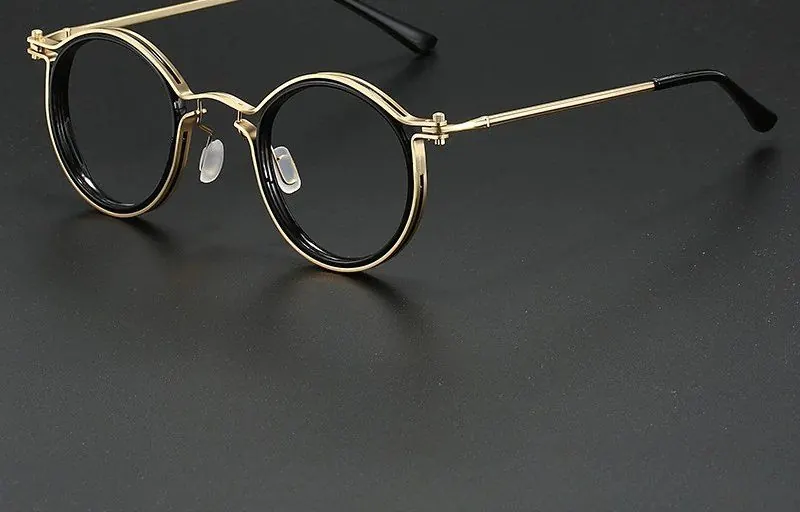
Kids, Teens & Families
Blue light glasses for kids: what parents should know
Quick answer
Kids' blue light glasses are child-sized frames with lenses that filter blue light from screens and cut glare. They are a comfort and style choice, not something a child needs. For most families the frame matters more than the lens: choose something light, bendy or sturdy, in a colour your child picked.
What are kids' blue light glasses, exactly?
They are non-prescription glasses made in smaller sizes, fitted with clear lenses that filter blue light from screens and carry an anti-glare coating that cuts reflections. That is the whole product, and it is worth being clear about it from the start.
Where they differ from adult frames is everything around the lens. Children's frames are narrower, lighter and built to survive being dropped, sat on and pushed into a book bag. Many are made from flexible plastics that bend rather than snap, and the arms are shorter so they sit properly behind a smaller ear.
Our kids' range is entirely non-prescription and made up of round frames, because a round shape suits most young faces and has no sharp corners to catch on a jumper or a car seat.
Do children actually need blue light glasses?
No. They are an optional extra, in the same way a tablet stand or a desk lamp is. Plenty of families never buy a pair, and plenty of children who have a pair only wear them some of the time.
What a pair honestly offers is modest: an anti-glare coating that cuts reflections from windows and lamps on a shiny tablet, a lens that filters blue light from the screen, and a frame some children genuinely enjoy wearing. We would rather you bought them knowing that than expecting more.
Screen routines are a separate question, and a family one. Glasses do not change how much time a child spends on a device, and they should never be presented as a reason more screen time is fine. If anything about your eyes worries you, book an eye test with an optician. For children it costs nothing: NHS sight tests are free for under-16s in the UK.
What should you look for in a kids' frame?
Look for a frame that survives rough handling, sits still on a small face and comes in a colour your child likes. Lens specifications vary very little between children's frames; build and fit vary a lot.
Most children remove glasses one-handed by grabbing an arm and pulling, and most pairs spend more time in a bag than on a face. Buy with that in mind rather than with how the frame looks in a product photo.
- A flexible frame that bends back, or a metal front that holds its shape
- Soft arm tips or sleeves that grip gently without pinching
- Nose pads or a bridge that sits without sliding down
- A width that matches the face, not one with growing room
- A colour or detail your child chose themselves
- A price low enough that a lost pair is not a crisis
Which of our kids' frames suits which child?
It mostly comes down to age, how rough they are with their things, and whether they want playful or grown-up. All four frames have lenses that filter blue light from screens and cut glare.
For younger or rougher children, the Kids Flexi (£9.99) is a soft, bendy round in black, blue-tint or pink-tint, and the Kids Colour-Pop (£11.99) is a flexible TR90 round with silicone nose pads in seven colour combinations. Both suit roughly ages three to twelve.
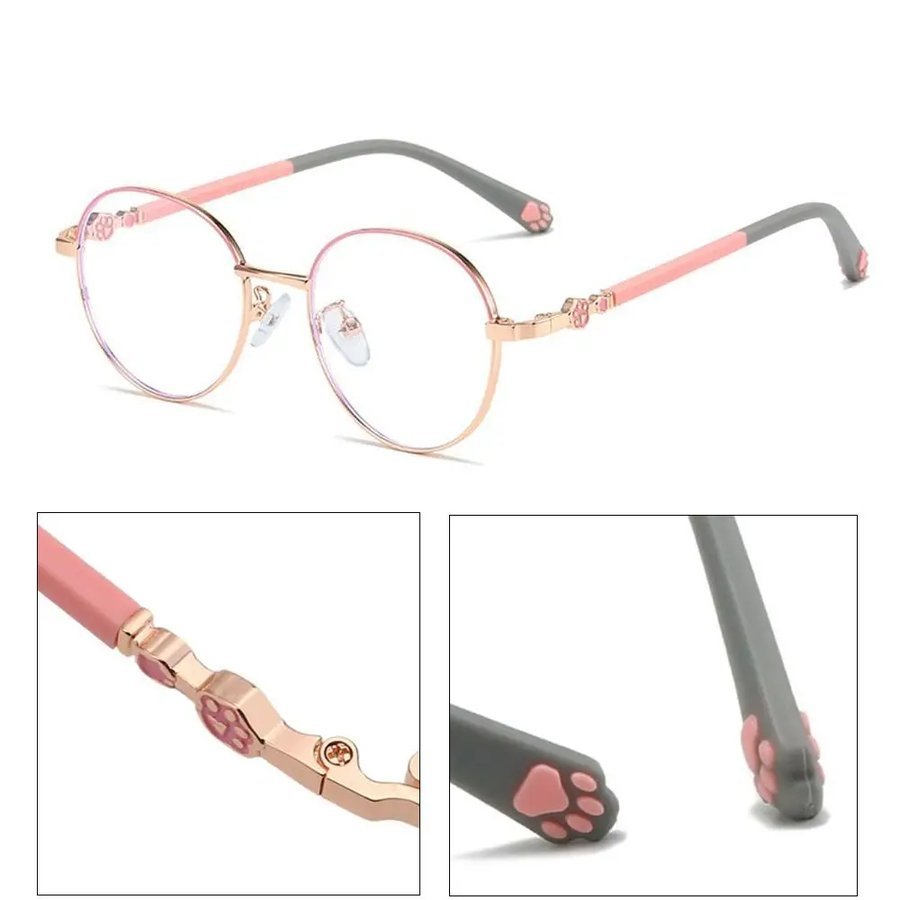
For children who want something that looks more like a parent's pair, the Kids Rose & Navy (£11.99) is a slim metal round with paw prints on the tips, and the Kids Cat-Paw (£12.99) is a rose-gold metal round with cat-paw arm tips. Their metal fronts keep their shape and the soft sleeves stay put on busy days.
What age can children start wearing them?
From whenever a frame fits and your child will keep it on, which in practice is around three or four for our smallest rounds. Age on its own is a rough guide, because faces vary a lot within a school year.
The flexible frames in our range suit roughly ages three to twelve. Beyond that, most children start to outgrow a kids' frame: the arms splay outward or the lenses sit too close together. That is the point to look at small adult frames, which usually suit a teenager better than a large children's pair.
If you are unsure between two sizes, the one that fits now is the right choice. A frame bought with growing room slides down the nose, gets pushed up a hundred times a day and ends up in a drawer.
How do you get a child to actually wear them?
Let them choose. A child who picked the frame wears it; a child handed a frame they did not choose usually does not, however sensible it is.
The easiest way to do that without ending up with something you dislike is a shortlist: you pick two or three you are happy with, and the choice between them is genuinely theirs.
- Offer a shortlist of two or three, then let them decide
- Point out the details: paw prints, two-tone arms, bright colours
- Keep them in the same place, such as next to the tablet
- Wear your own pair at the same time if you have one
- Keep it relaxed: glasses are a choice, not a rule for getting the tablet
Round frames suit most young faces, which is why our whole kids' range is round. Our post on who round glasses suit explains why the shape works so widely.
Buying kids' glasses online without the guesswork
Buying online is simple if you use the safety nets. Check the fit against a pair your child already wears if you can, order in time for when you need them, and know how returns work before you open the parcel.
Orders are dispatched within 48 hours, and UK delivery is free over £20 (otherwise £5.99). Every pair comes with a 30-day money-back guarantee and free returns, so a wrong colour or a frame that does not suit is easy to sort out. If you cannot decide, our Home Try-On sends up to four frames for seven days, free.
For the bigger picture on choosing, fitting and screen routines, read our parent's guide to kids' blue light glasses, or browse more posts in Kids, Teens & Families.
Frequently asked
Do kids need blue light glasses?
No, they are an optional comfort and style choice rather than a necessity. The lenses filter blue light from screens and cut glare, and many children simply like wearing them. If anything about your eyes worries you, book an eye test with an optician.
What age can a child wear blue light glasses?
Any age where a frame fits and they will keep it on, which is usually from around three or four. Our flexible kids' frames suit roughly ages three to twelve. Older children and teenagers are often better suited to small adult frames.
Can kids wear blue light glasses all day?
They can wear a well-fitting pair for as long as they are comfortable, but there is no need to. Most children only put them on for tablets, homework or gaming. A frame that fits properly and is light is the one they will be happy to keep on.
What is the best material for kids' glasses?
A flexible plastic such as TR90 is the most forgiving for young children because it bends rather than snapping. Slim metal fronts with soft arm sleeves are a good option for older, more careful children who want a grown-up look.
Are children's eye tests free in the UK?
Yes, NHS sight tests are free for children under 16 in the UK. If anything about your child's eyes worries you, book an eye test with an optician before buying any glasses.
How much do kids' blue light glasses cost?
Our kids' frames cost between £9.99 and £12.99. UK delivery is free on orders over £20, and every pair has a 30-day money-back guarantee with free returns.
Mentioned above
Frames from this guide
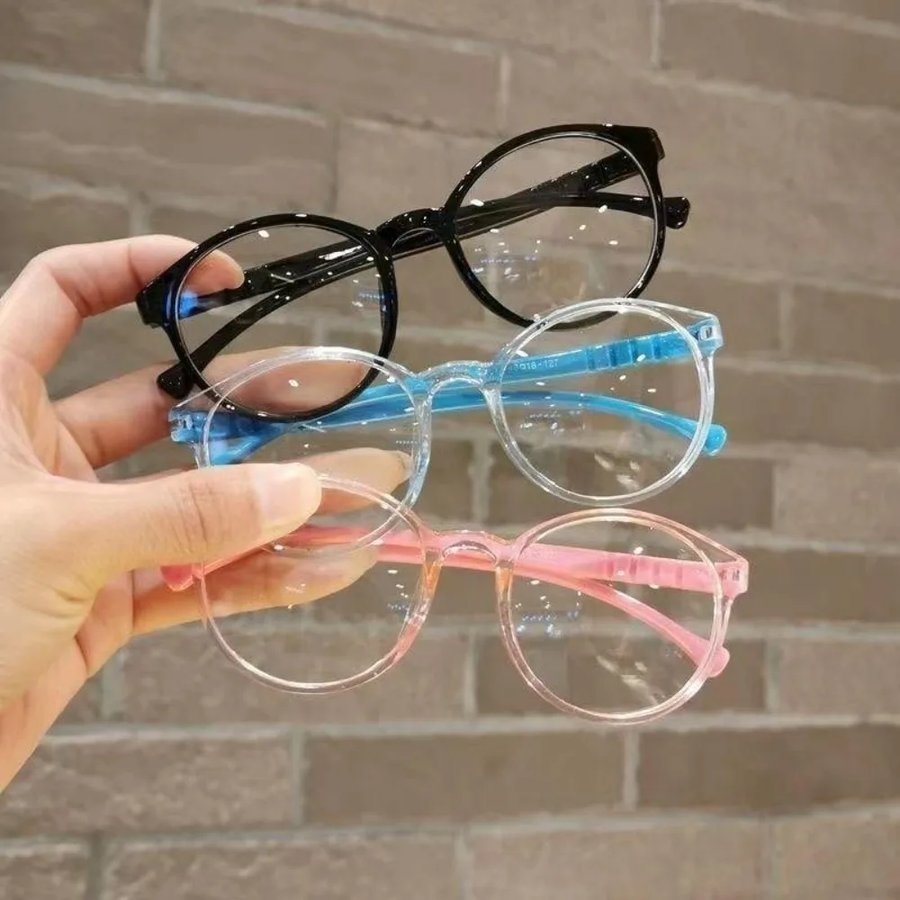
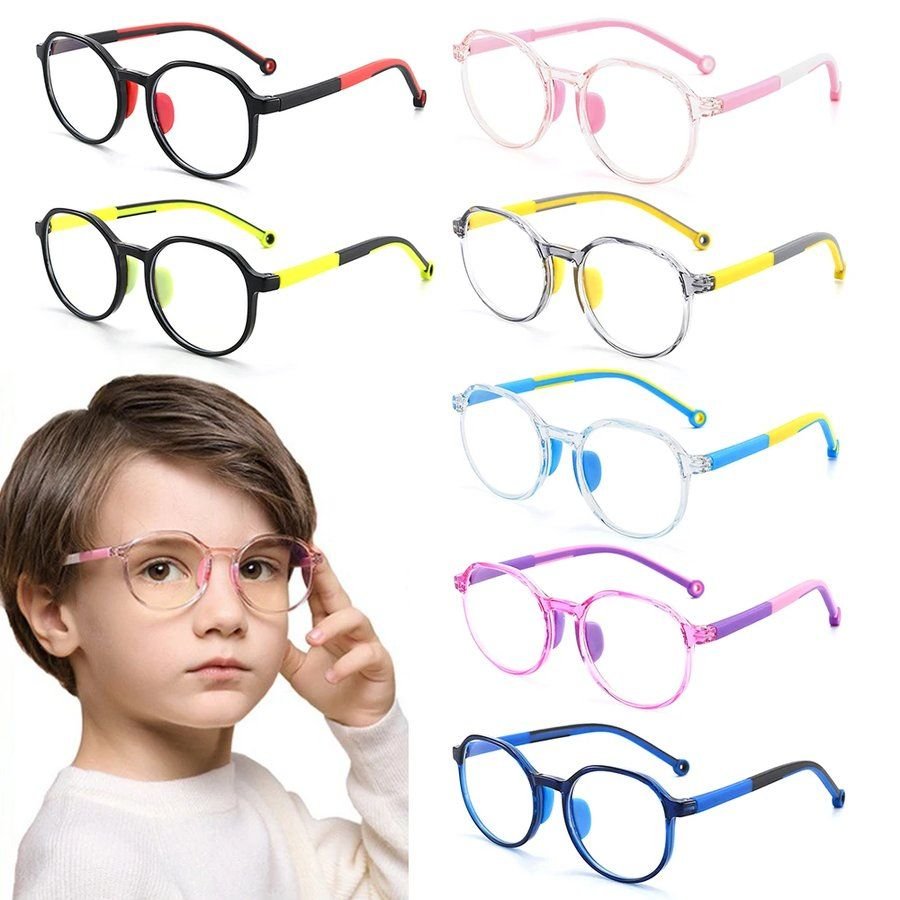
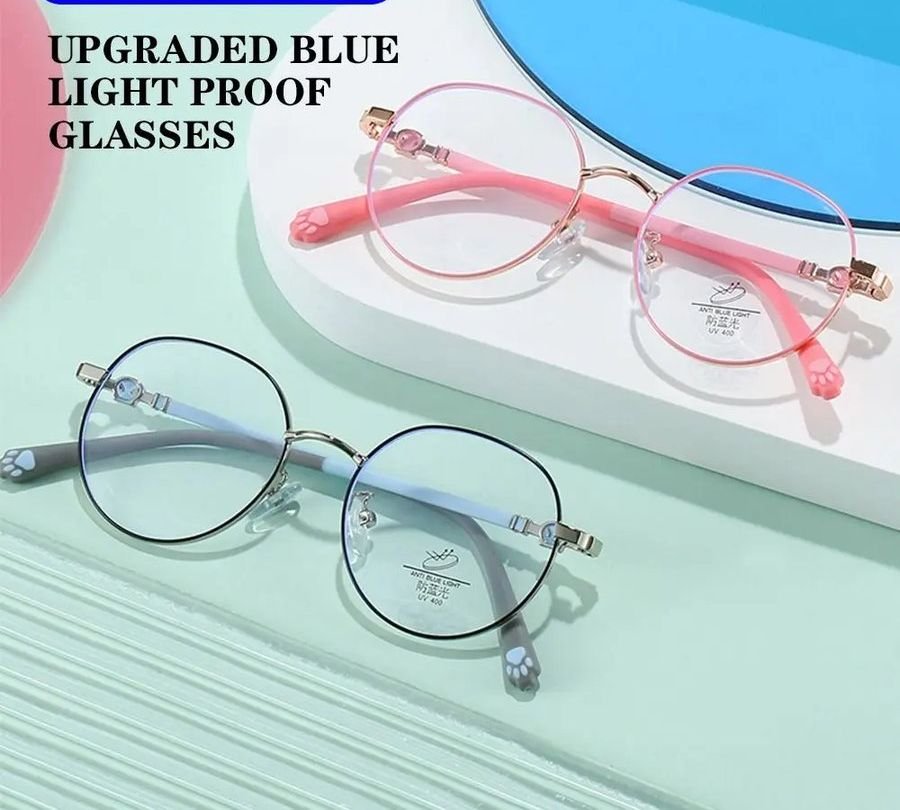
Kids, Teens & Families
More from this topic
Blue light glasses for teens and gaming
Most teenagers need a small adult frame rather than a kids' one, and they care a lot about how it looks. For school and.
Read Kids, Teens & FamiliesManaging family screen time
Family screen time is easiest to manage with a few simple household agreements about where and when devices are used.
Read