Styles, Frames & Face Shapes
Blue light glasses for small and narrow faces: a UK fit guide
Quick answer
For a small or narrow face, choose blue light glasses with a smaller total width, a lens that suits your proportions and a bridge that sits snugly. Check the three numbers printed inside the arm, favour slim, light frames in round, oval or cat-eye shapes, avoid oversized styles, and try frames on at home before you commit.
How do you know if you have a small or narrow face?
If most standard glasses slide down your nose, overhang your temples or leave a gap at the sides of your head, you probably have a small or narrow face for frame purposes.
This is about proportion, not age or height. Plenty of tall adults have a narrow face, and plenty of petite people do not. Other signs are arms that stick out past your ears rather than resting on them, frames that look like they belong to someone else in photos, and lenses where your eyes sit towards the inner edge rather than the centre. A simple home check is to hold a ruler across your face at eye level, from temple to temple, and compare it with a pair of glasses that fits you well, if you have one.
- Glasses regularly slide down your nose
- The frame front overhangs your temples
- Arms bow outwards instead of resting on your ears
- Your eyes sit near the inner edge of each lens
- Most frames look borrowed in photos
What do the three numbers on the arm of glasses mean?
Most frames have three numbers printed on the inside of an arm, such as 48□18 140. They are the lens width, the bridge width and the arm length, all in millimetres.
In that example, 48 is the width of each lens at its widest point, 18 is the gap between the two lenses where the frame sits on your nose, and 140 is the length of the arm from hinge to tip. The small square between the first two numbers is simply a standard separator. These numbers are the most reliable way to compare frames, far more useful than a size label like small or medium, which varies between brands. The easiest approach is to find a pair you already own that fits well, note its numbers, and use them as your baseline when shopping.
- First number: lens width, in millimetres
- Second number: bridge width, the gap over your nose
- Third number: arm length, from hinge to tip
- Compare against a pair that already fits you
- Total frame width also depends on the hinges and rim
Which frame shapes suit a small or narrow face?
Round, oval, slim cat-eye and compact square frames tend to suit small and narrow faces best, as long as they are scaled down to match.
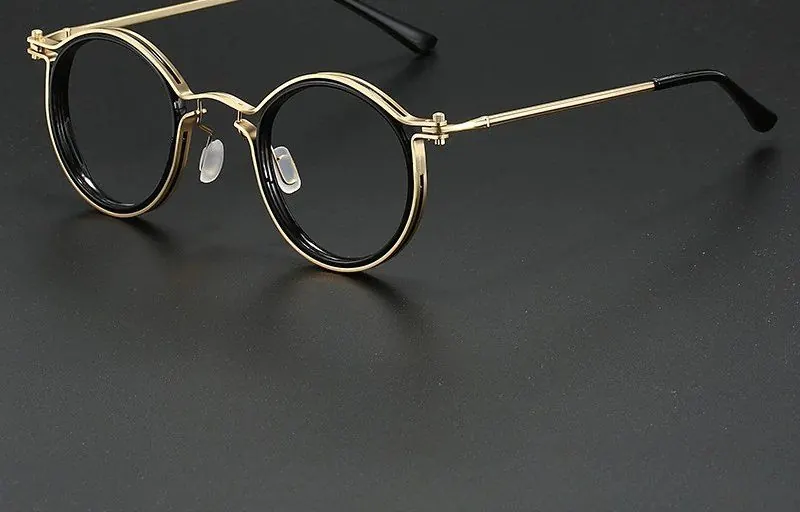
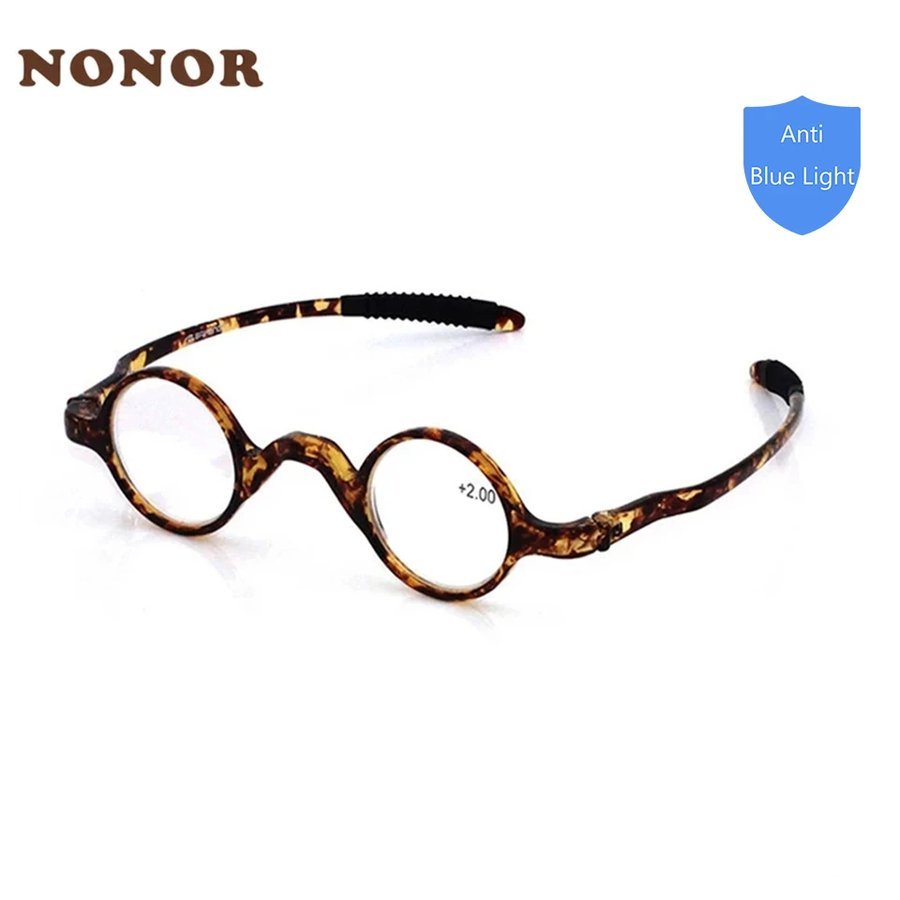
Shape and size work together. A round frame in a modest size looks neat and in proportion on a narrow face, and softer shapes stop the frame from dominating delicate features. A slim cat-eye adds lift and a little visual width at the top, which can balance a narrow face nicely. Compact squares add some definition without swamping. What to approach with caution is anything oversized, very deep or heavily winged, because extra scale on a small face tips from bold into borrowed. If you like the look of a bigger frame, pick the most compact version of it and choose a clear or light colour so it carries less visual weight.
Why does frame weight matter more on a small face?
A lighter frame stays in place better on a small nose and narrow head, and is simply more comfortable over a long day at a screen.
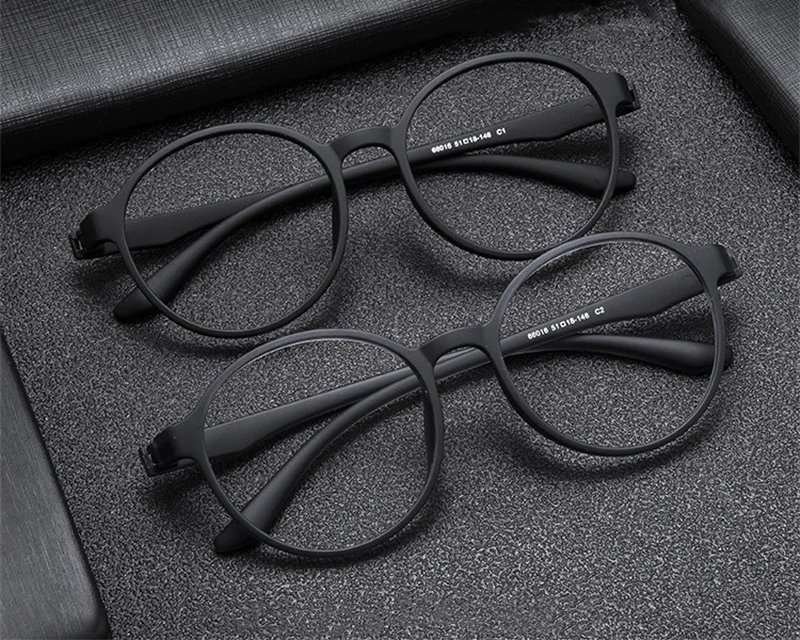
Heavy acetate frames put more weight on the bridge of the nose, and on a smaller nose there is less surface to spread it across, so the frame is more likely to slip and need pushing back up. Thin metal and lightweight frames sit more securely. Slim rims also look more in proportion with smaller features. If you are choosing between two similar shapes, go for the lighter one; the Featherlight Round Blue Light Glasses are named for exactly this reason. Chunky frames are not off limits, but they are the hardest style to get right on a narrow face.
Petite adult frames or kids' frames: which should you choose?
Some adults with very small faces do find kids' frames fit them well. It is worth considering, but the styling is usually designed for children, so look closely before you buy.
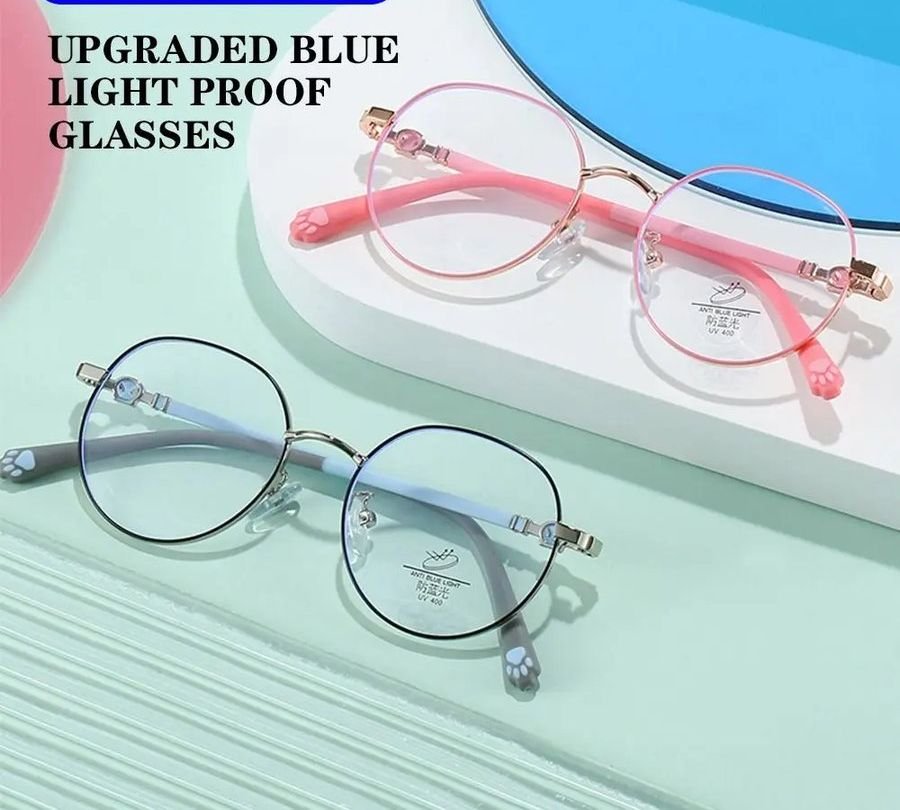
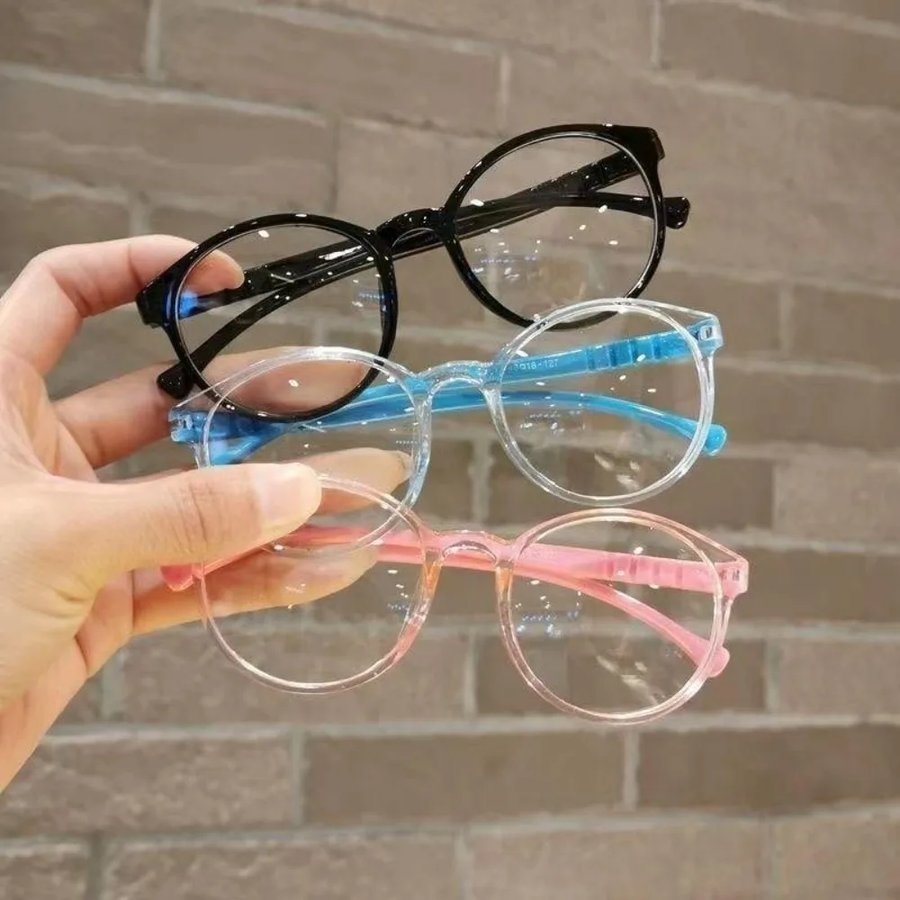
Kids' frames are built for smaller heads and noses, and many are bendy and light, which are useful qualities at any age. The Kids Rose and Navy slim metal rounds, for instance, have a fairly understated look. The trade-off is details like paw prints on the arm tips or bright colour combinations, which may not suit your wardrobe or workplace. Adult frames with a slim profile are usually the better first stop, and kids' frames are a sensible second option if adult styles consistently overhang your face. If you are buying for a child rather than yourself, our guide to blue light glasses for kids is the place to start.
How can you check the fit of glasses at home?
Put the frame on, look straight into a mirror, and run through a few quick checks. Most fit problems are visible within a minute.
Start at the sides: the frame front should end roughly in line with your temples, with no big overhang and no pinching. Then look at your eyes, which should sit close to the centre of each lens. The bridge should rest on your nose without leaving a gap or pressing hard. Next, tilt your head down and give it a gentle shake; a frame that slides straight away is too wide or too loose at the bridge. Finally, check the arms run straight back and curve down comfortably behind your ears. Take a front-on photo too, because we notice proportion more clearly in a picture than in the mirror.
The easiest way to check fit on a small face is to do it in your own home. Home Try-On lets you try up to four frames for seven days, free. Keep the one that fits, or none, and send the rest back.
What should you do if a frame is nearly right?
If a frame is close but slightly loose, small adjustments can help, but they will not turn a frame that is too wide into one that fits.
Arms that are a little long or loose can often be gently adjusted so they grip better behind the ears, and adjustable nose pads on metal frames can be moved to lift the frame and stop it sliding. What adjustments cannot fix is a frame front that is wider than your face. If the lenses overhang your temples, choose a smaller frame instead. When you order from us, orders over £20 get free UK delivery (otherwise £5.99), we dispatch within 48 hours, and the 30-day money-back guarantee with free returns means you can swap a frame that does not quite work. For a wider look at shapes, see our frame shapes and face shapes guide. If anything about your eyes worries you, book an eye test with an optician.
Frequently asked
What size glasses do I need for a small face?
Look at the three numbers inside the arm of a pair that already fits you, then shop for frames with similar lens width, bridge and arm length. If you have no reference pair, choose compact, slim frames and check the fit at home.
What glasses suit a narrow face?
Compact round, oval, slim cat-eye and small square frames usually suit a narrow face. Avoid oversized or very deep frames, which tend to overhang the temples and look borrowed.
What does 48 18 140 mean on glasses?
It is the frame size in millimetres. 48 is the width of each lens, 18 is the bridge width over your nose, and 140 is the length of each arm.
Can adults wear kids' glasses frames?
Yes, some adults with very small faces find kids' frames fit well. The styling is often designed for children, so check colours and details, and try slim adult frames first.
Why do my glasses keep sliding down my nose?
Usually the frame is too wide for your face, the bridge is too wide for your nose, or the frame is heavy. A narrower, lighter frame or adjusted nose pads normally fixes it.
How do I know if glasses are too big for my face?
If the frame front extends past your temples, your eyes sit near the inner edges of the lenses, or the glasses slide when you look down, they are likely too big.
Mentioned above
Frames from this guide
Styles, Frames & Face Shapes
More from this topic
Round blue light glasses: who they suit
Round blue light glasses suit faces with defined angles. Square, rectangular and heart-shaped faces get the most from.
Read Styles, Frames & Face ShapesOval blue light glasses styling
Oval blue light glasses are the gentlest frame shape: a soft, slightly horizontal lens with no corners. They suit.
Read Styles, Frames & Face ShapesCat-eye blue light glasses
Cat-eye blue light glasses lift at the outer corner, drawing attention upward and adding definition at the cheekbone.
Read