Buyer's Guide & Buying Advice
What are blue light glasses? A plain-English answer
Quick answer
Blue light glasses are ordinary-looking glasses whose lenses filter part of the blue light that comes from screens, usually with an anti-glare coating that cuts reflections. Most are non-prescription, with no magnification, though the filter can be added to prescription lenses. People wear them for a more comfortable-feeling screen setup and for style.
What are blue light glasses, in one sentence?
Blue light glasses are glasses with lenses that filter some of the blue light given off by phones, laptops, tablets and TVs. Most also have an anti-glare coating that cuts reflections on the lens.
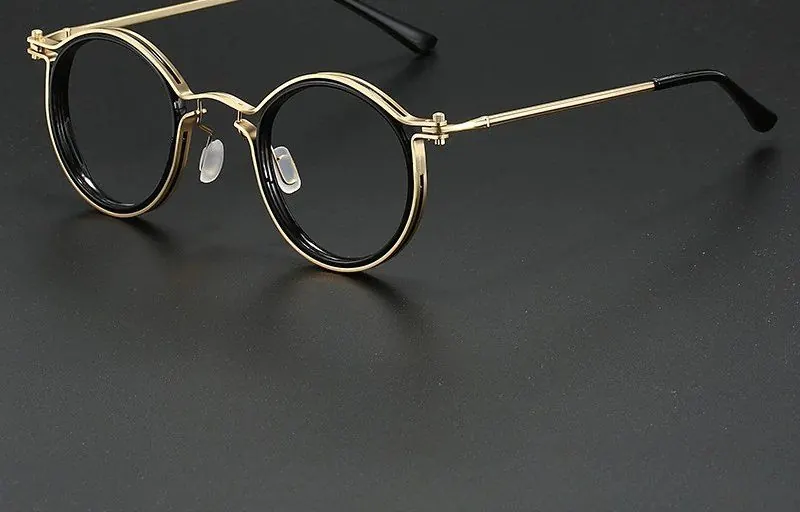
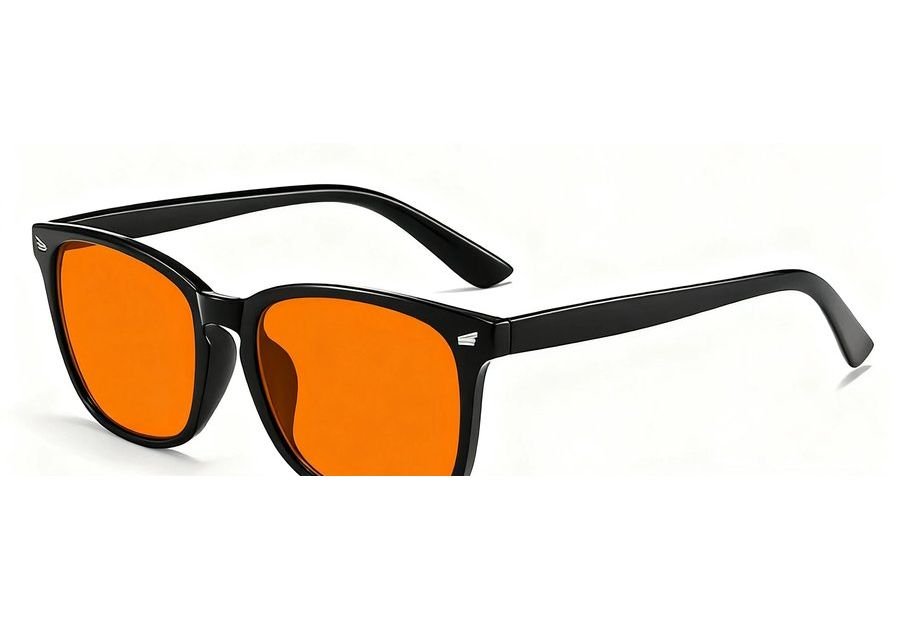
From the outside they look like any other pair of glasses. The frame can be a slim metal rectangle, a clear acetate square or a chunky tortoiseshell round. The difference is in the lens. You may see a faint warm tint or a slight coloured sheen when light catches it, but otherwise nothing about them looks unusual. That is part of the appeal: you can wear them at your desk, on a video call and on the sofa without looking as though you are wearing special equipment. Some styles, particularly amber and orange lenses for gaming, have a much more obvious tint.
What the lens is actually doing
A blue light lens usually does two separate jobs: filtering some blue light from screens, and cutting glare from reflections. It helps to keep the two apart.
The filter is either built into the lens material or added as a layer. It reduces a portion of the blue light passing through the lens, and the only visible sign is a slight warmth. The anti-glare coating works on light bouncing off the lens surfaces, such as an overhead light or a window behind you, so those reflections do not show up as bright smudges. Most people notice the anti-glare effect straight away, while the filtering is subtle. For a deeper look at how the two layers differ, our guide on choosing cheap blue light glasses shows how to check a lens for each.
- Filter: reduces some blue light from screens
- Anti-glare coating: cuts reflections on the lens
- Tint: the visible colour, from almost clear to deep orange
- Frame: decides comfort, fit and style
What blue light glasses are not
Non-prescription blue light glasses do not change how sharply you see, and we only describe what the lens does: it filters blue light from screens and the coating cuts glare. We do not promise anything beyond that.
It is worth being clear about this because some sellers make big claims. A non-prescription pair has lenses with no magnification, sometimes called plano lenses, so they will not help you read small print or see further away. If you need that, you want a prescription pair or reading glasses with the filter added, and our blue light readers come in a range of strengths. If anything about your eyes worries you, book an eye test with an optician. Blue light glasses are also not sunglasses, so keep them for screens and indoor use.
Why people wear them
Most people buy blue light glasses for two reasons: they like how a lens with anti-glare and a slight filter feels for long screen sessions, and they like wearing glasses as part of their look.
The first reason is about the setup you work in. Office lighting, windows and bright monitors all create reflections, and a coated lens cuts those down. Some people also prefer the slightly warmer tone, in the same way they might prefer a warm bulb in a lamp. The second reason is style. Glasses change a face more than almost any accessory, and plenty of people who do not need correction enjoy wearing a frame. Both are perfectly good reasons. Neither needs to be dressed up as more than it is.
Habits count as well as glasses. Taking regular breaks from the screen, looking away into the distance every so often, setting your monitor at arm's length and matching screen brightness to the room are all simple changes that make a long day at a desk feel better, with or without a pair on.
Clear, tinted or amber: the main lens types
Blue light lenses come in three broad types: clear, lightly tinted and amber or orange. The stronger the tint, the more blue light is filtered and the more colours shift.
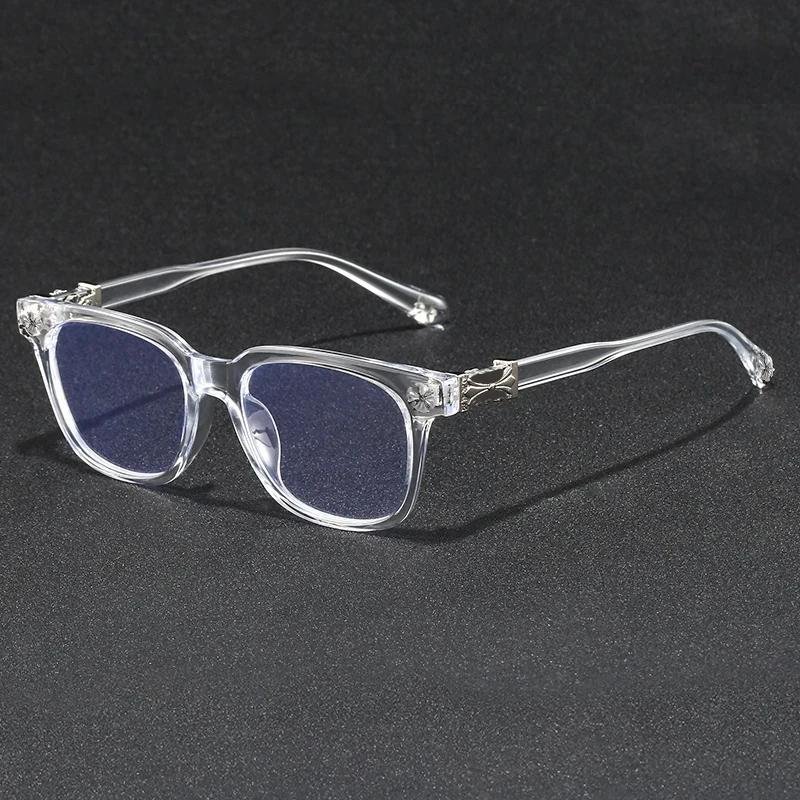
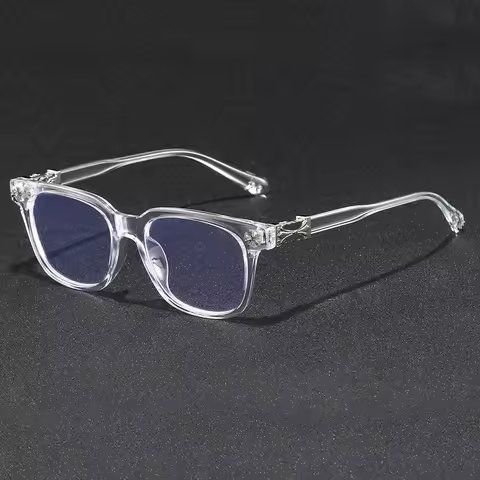
Clear lenses look like normal glasses and keep your screen's colours close to true, so they suit work and video calls; try the Crystal Clear or the Ghost Clear. A light tint sits in the middle. Amber and orange lenses have an obvious warm colour and filter more, which many gamers like for evening sessions in a dim room; the Sunset Lens is a popular example. There is no single correct choice, only the one that fits how and when you use screens.
- Clear: everyday wear, work, on camera
- Light tint: a middle ground, subtle indoors
- Amber or orange: evening gaming, warm colour cast
- Red: the strongest tint, for dedicated evening use
Who wears blue light glasses?
Anyone who spends a lot of time at screens can wear them. The most common groups are office and home workers, students, gamers and people who already use reading glasses.
Desk workers often choose a slim, clear frame that looks professional on calls; the computer and screen glasses range is built around that. Gamers tend to want a frame with thin arms that sits comfortably under a headset. Students want something affordable and hard-wearing, and our student page covers the options. Readers want magnification and a filter in one pair. Children can wear them too, as long as the frame is flexible and properly sized. The right pair looks different for each of these people, which is why frame choice matters as much as the lens.
How to choose your first pair
Start with the frame shape that suits your face, pick a clear lens unless you mainly use screens in the evening, and choose the lightest frame you like the look of.
Then check the practical details: frame measurements close to a pair you already find comfortable, an anti-glare coating, and a returns policy that gives you time to wear them for a few days. We offer a 30-day money-back guarantee with free returns, and Home Try-On sends up to four frames for seven days, free. For a shortlist of frames, see our 2026 edit, and for the full picture read the complete UK guide to blue light glasses.
Frequently asked
What do blue light glasses do?
Their lenses filter part of the blue light that comes from screens, and most have an anti-glare coating that cuts reflections from lights and windows. Many people find this makes a long screen session feel more comfortable, and they are also a style choice.
Do blue light glasses actually work?
They do what the lens describes: filter some blue light from screens and cut glare. The anti-glare effect is the part most people notice immediately. We do not make promises beyond what the lens itself does.
Can anyone wear blue light glasses?
Yes. Non-prescription pairs have no magnification, so anyone can wear them, including people with no need for correction. If you need a prescription, the filter can be added to prescription lenses.
Can I wear blue light glasses all the time?
You can. Non-prescription blue light lenses do not change how you see, so there is no need to take them off between screen sessions. Tinted lenses shift colours, so many people keep those for evenings.
Do blue light glasses work on phones and TVs?
Yes. The lens filters light the same way whatever screen you are looking at, whether that is a phone, tablet, laptop, monitor, console or TV.
Do blue light glasses make everything look yellow?
Clear lenses only add a very faint warmth that most people stop noticing quickly. Amber and orange lenses make colours look noticeably warmer, which is why they are usually chosen for evening use.
Mentioned above
Frames from this guide
Buyer's Guide & Buying Advice
More from this topic
Best blue light glasses UK 2026: our edit
The best blue light glasses in the UK for 2026 are the pair you forget you are wearing: light, well fitted, with lenses.
Read Buyer's Guide & Buying AdviceWhere to buy blue light glasses in the UK
You can buy blue light glasses in the UK from online specialists, high street opticians, department stores and online.
Read Buyer's Guide & Buying AdviceWhere can I buy blue light glasses near me?
Near you, blue light glasses are usually sold by high street opticians such as Specsavers, Boots Opticians and Vision.
Read