Buyer's Guide & Buying Advice
Cheap blue light glasses: what to check under £20
Quick answer
Yes, you can get good blue light glasses for under £20. At this price the lens job is broadly similar across pairs, so check the frame instead: smooth hinges, arms that flex without creaking, a clean lens edge, an even coating and a clear returns policy. Those checks tell you whether a cheap pair will last.
Can you get decent blue light glasses under £20?
Yes. A well-made non-prescription pair with lenses that filter blue light from screens and an anti-glare coating does not need to cost more than £20. Our own range starts at £9.99.
The reason is simple: the lens filter and the anti-glare coating are not expensive parts to produce. What changes as prices climb is mostly the frame: the material, the hinges, the weight and the finish. A £30 pair may use premium acetate or flexible TR90 and feel more solid in the hand, but it is not doing a fundamentally different job at your screen. So the smart way to shop on a budget is to stop comparing lens claims and start checking build quality. The sections below show you exactly what to look at, whether you are holding a pair in a shop or reading a product page.
What you are really paying for
Under £20, you are mostly paying for the frame and the seller's service, not a better lens. That is where the differences show up.
Frame material decides weight and durability. Thin metal and lightweight plastics keep a pair light, while chunky acetate feels more substantial but adds grams. Hinges decide how long the arms keep their shape. The finish decides whether a frame still looks good after six months of being pushed onto your head. And the seller decides what happens if something goes wrong. A cheap pair from a shop with free returns is a very different proposition from a cheap pair you cannot send back. Delivery counts too: our UK delivery is free over £20 and £5.99 below that, so it is worth factoring in when comparing a £9.99 pair with a £12.99 one elsewhere.
- Frame material: weight and how it wears
- Hinges: how long the arms stay straight
- Finish: how the frame looks after months of use
- Returns: whether a mistake costs you money
- Delivery: the true total price at checkout
The hinge test
The hinge is where cheap frames usually fail first, so check it before anything else. A good hinge moves with the same gentle resistance all the way from closed to open.
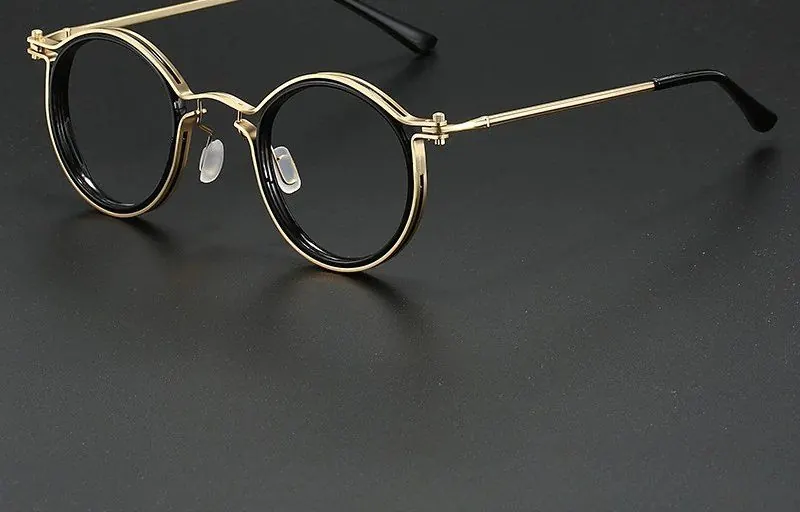
Open and close each arm slowly. If it is loose at the start and then suddenly stiff, or you can see a gap where the hinge meets the frame, that is a weak point that will loosen with daily use. Spring hinges are worth looking for at any price: a small spring lets the arm flex outwards a few degrees, so the frame does not stretch out of shape when you pull the glasses off with one hand. The Everyday Readers Twin Pack at £9.99 has spring hinges, which is unusual at that price. Online, check the product details for the hinge type; if it is not mentioned, it is probably a basic one.
Lens edge, coating and tint
A well-finished lens has a smooth, evenly polished edge and a coating with a consistent sheen across the whole surface. Patchy colour or rough edges are signs of rushed manufacturing.
Hold the lens at an angle to a window or lamp. An anti-glare coating gives off a faint green, blue or purple reflection rather than a bright white mirror, and that sheen should look even from edge to edge. Then look for a slight warm tint when you hold the lens over white paper. A faint colour is normal for a lens that filters blue light from screens, and a lens sold as totally colourless is likely filtering only a small amount. Finally, look through the lens at a straight line such as a door frame and move your head; the line should stay straight rather than bending or wobbling.
- Smooth, evenly polished lens edges
- An even coloured sheen under a lamp
- A faint warm tint over white paper
- Straight lines stay straight through the lens
- No bubbles, specks or cloudy patches
Fit and weight matter more than the price tag
A cheap pair that fits well will get worn every day; an expensive pair that pinches will not. Fit is the best value check there is.
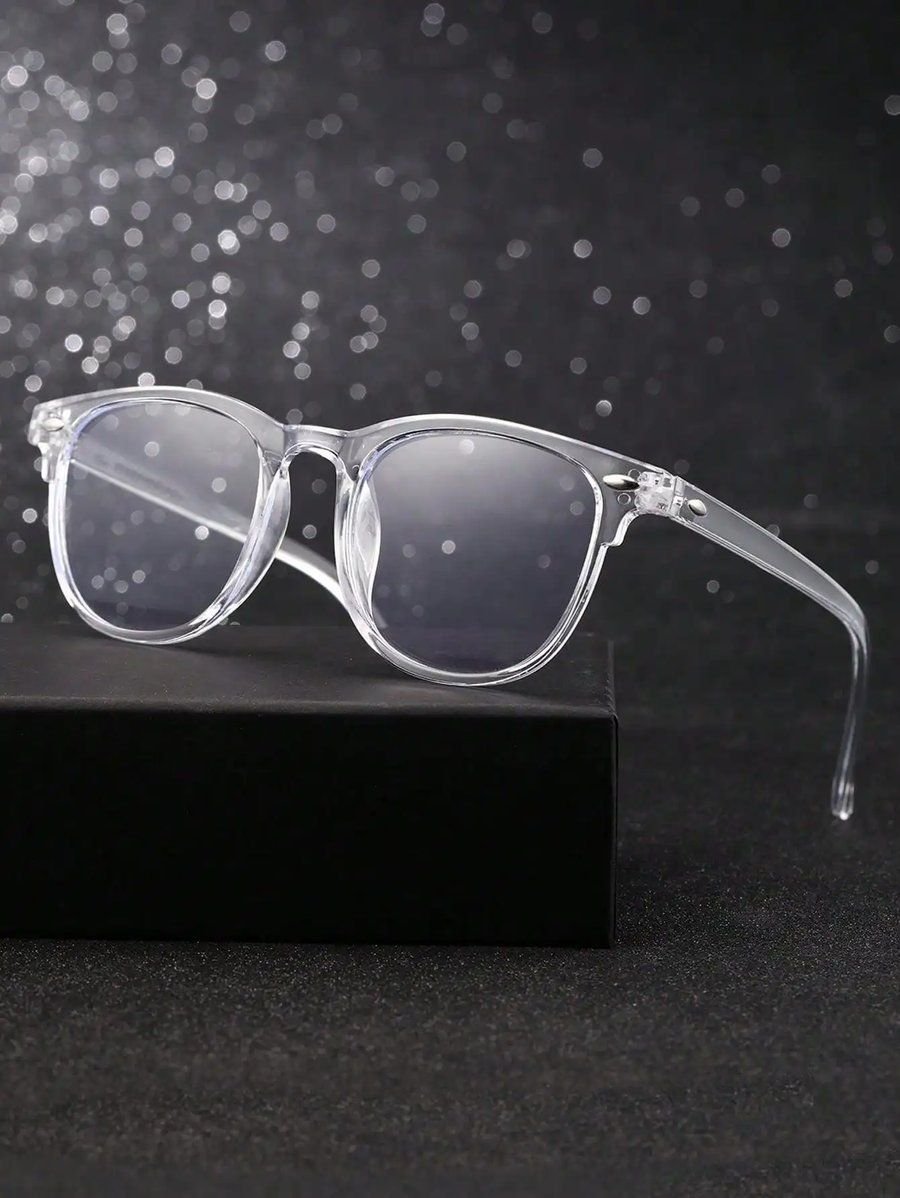
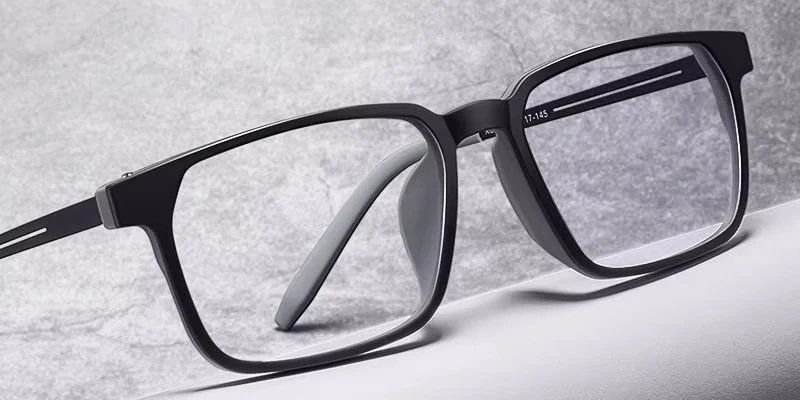
Look for frame measurements on the product page and compare them with a pair you already find comfortable. The three numbers inside the arm show lens width, bridge width and arm length. Lighter frames are easier to wear for long stretches, which is why the Titanium Square readers, at around eight grams and £9.99, are one of our most practical budget picks. If you prefer a non-reader, the Ice Clear at £9.99 is a light transparent wayfarer. Not sure what suits your face? Home Try-On lets you test up to four frames for seven days, free, before you spend anything.
Multi-packs: the best value under £20
If you tend to lose glasses or want a pair in more than one place, a multi-pack is usually better value than buying singles. You get spares without paying much more.
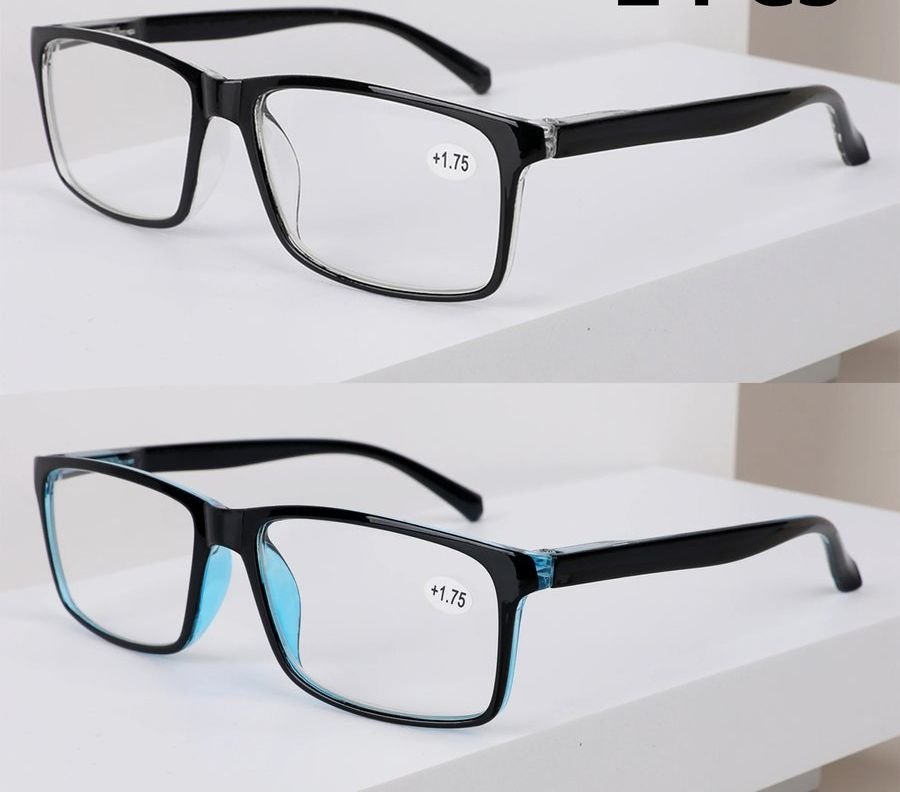
The Studio Square Twin Pack gives you one matte black and one clear square for £12.99. For readers, the Half-Rim Four Pack is £12.99 for four pairs: one for the desk, one for the sofa, one for your bag and one for when the others go missing. A multi-pack also takes you closer to the £20 free delivery threshold, and two single pairs will usually clear it. If you want to see what larger high street retailers offer at this price, we looked at one in Boots blue light glasses: what is on offer.
When cheap is a false economy
There are two situations where the cheapest option can cost you more in the end: when you need prescription lenses, and when you are buying for a child.
If you need a prescription, a budget non-prescription pair will not do the job, so you end up buying twice. Go straight to prescription frames instead. For children, frames get dropped, sat on and stuffed into book bags, so a flexible frame lasts far longer than a rigid cheap one. The Kids Flexi at £9.99 is built for exactly that. For more on choosing well at any budget, read our 2026 edit and the complete UK guide.
Every pair we sell, including our £9.99 frames, has an anti-glare coating as standard and a 30-day money-back guarantee with free returns. If a budget pair is not right, send it back and we cover the postage.
Frequently asked
Are cheap blue light glasses any good?
Many are. The lens filter and anti-glare coating are inexpensive to produce, so a low price does not automatically mean a poor lens. Check the hinges, frame finish and returns policy, as that is where cheaper pairs differ.
What is the difference between £10 and £50 blue light glasses?
Mostly the frame: material, hinge quality, weight, finish and brand name. The basic job of filtering blue light from screens and cutting glare is similar. Spend more if you want a premium material or a particular look.
Do cheap blue light glasses have an anti-glare coating?
Some do and some do not, so check the product description. Anti-glare is the coating that cuts reflections from lights and windows, and it is the part you notice most at a screen. All of our pairs include it as standard.
How can I tell if cheap blue light glasses actually filter blue light?
Hold the lens over a sheet of white paper or a white screen. A lens that filters blue light usually shows a faint warm tint. A lens with no colour shift at all is likely filtering very little.
Is it worth buying a multi-pack of blue light glasses?
If you often misplace glasses or want a pair in several rooms, yes. A twin or four pack costs less per pair than buying singles and often takes your order over the free delivery threshold.
Mentioned above
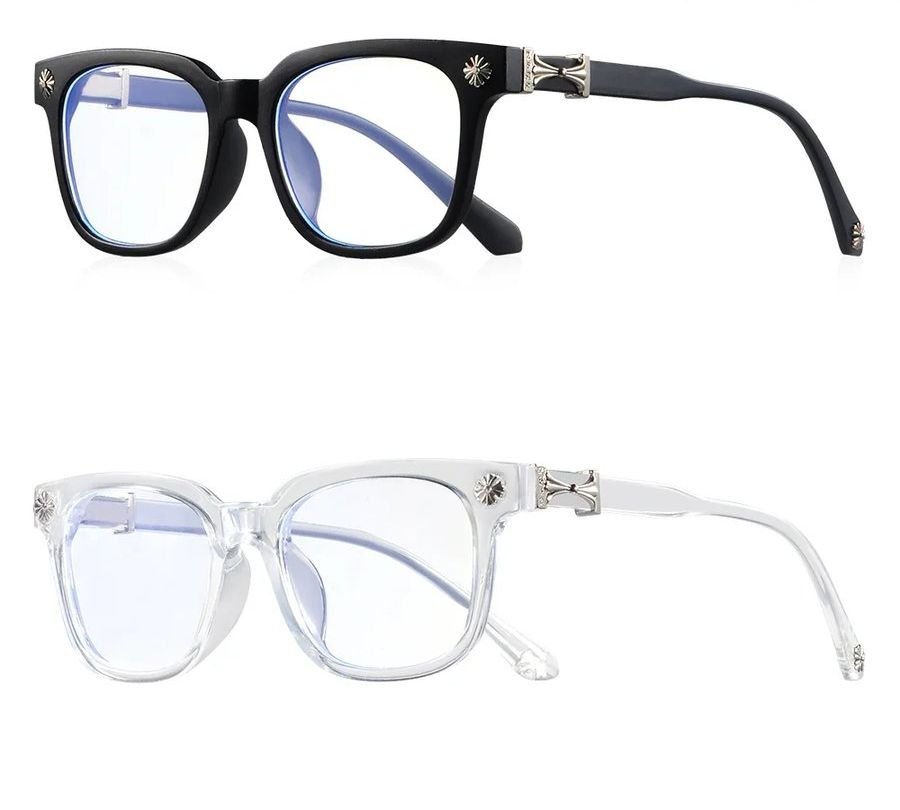
Frames from this guide
Buyer's Guide & Buying Advice
More from this topic
Best blue light glasses UK 2026: our edit
The best blue light glasses in the UK for 2026 are the pair you forget you are wearing: light, well fitted, with lenses.
Read Buyer's Guide & Buying AdviceWhere to buy blue light glasses in the UK
You can buy blue light glasses in the UK from online specialists, high street opticians, department stores and online.
Read Buyer's Guide & Buying AdviceWhere can I buy blue light glasses near me?
Near you, blue light glasses are usually sold by high street opticians such as Specsavers, Boots Opticians and Vision.
Read