Fashion & How to Style
Designer blue light glasses: the look for less
Quick answer
Designer blue light glasses are fashion-led frames with lenses that filter blue light from screens. A big share of a luxury price pays for the label, licensing and marketing. The shape, acetate finish and hinge quality that actually create the look are available for far less once you know what to check.
What counts as a designer blue light frame?
A designer frame is one chosen for how it looks first and what it does second. In practice that means a strong silhouette, a considered colour and some detailing, fitted with a lens that filters blue light from screens and an anti-glare coating that cuts reflections.
The label on the arm is only one route to that. Fashion houses mostly license their eyewear to specialist manufacturers, and the same design ideas, materials and finishes run right through the market. That is why a well-chosen frame at a high-street price can sit on your face looking every bit as deliberate as one with a famous name printed on the temple.
So the useful question is not which brand but which features make a frame look expensive. Once you can name those, you can shop for them at any budget.
What does a designer price actually pay for?
Mostly the name, the packaging and the marketing around it. Design direction is a genuine part of the value too, but it is the part that spreads fastest, because a shape that works on faces soon appears everywhere.
What a higher price rarely buys is a meaningfully different lens. Blue light filtering and anti-glare coatings are mature, widely available technologies, so the gap between a budget pair and a luxury pair is usually in the frame: the density of the acetate, the depth of the polish and the feel of the hinge. Those are worth caring about, and they can be judged by eye and hand without knowing who made the frame.
If a particular designer pair has caught your eye, check the brand’s current price yourself before comparing. Luxury eyewear pricing changes often, and a like-for-like look is easier to weigh up with real numbers in front of you.
Which details make glasses look expensive?
A handful of design features do almost all the work. Get two or three of these in one frame and it will read as premium, whatever it cost.
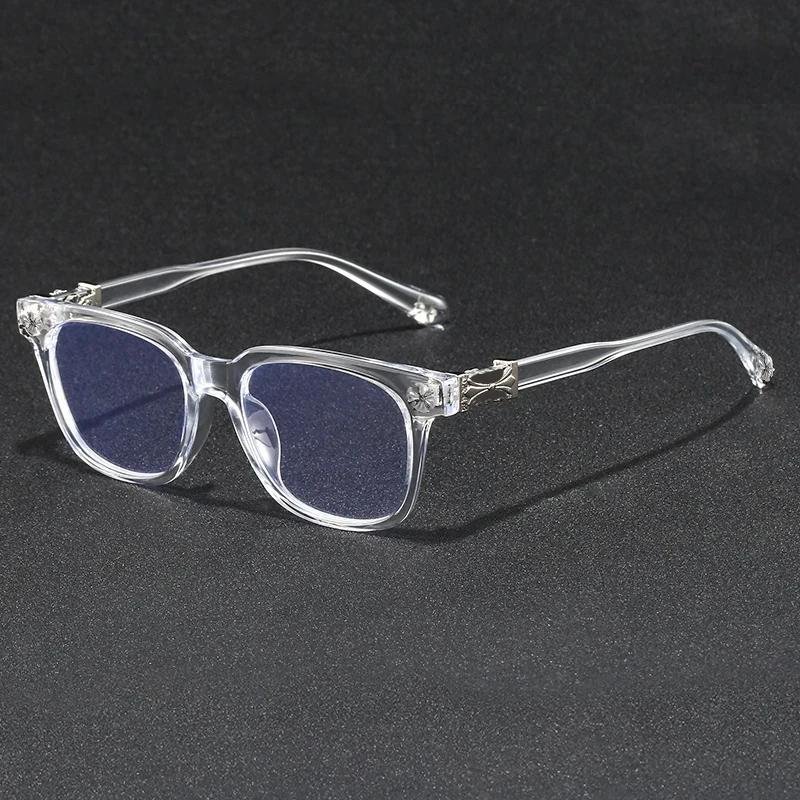
- Thick, glossy acetate with a deep polish on every edge
- A keyhole bridge, the vintage arch that lifts a round or panto frame
- Metal detailing such as rivets, engraved temples or exposed bridgework
- Warm metals, especially brushed gold against black
- Translucent colours like crystal, smoke or slate that look light but substantial
- A confident top line, flat and strong across the brow
How do you judge frame quality without a logo?
Handle it for ten seconds. Quality shows in the parts you touch rather than the parts you read.
Open and close the arms: the hinge should move with even resistance, and a spring hinge that flexes outward is a good sign of a frame built for daily wear. Run a finger along the inside edge where the arm meets the front, since a well-finished frame is smooth there and a rushed one leaves a ridge. Then put it on and look down; a balanced frame stays put rather than sliding down your nose.
- Hinges move smoothly, ideally with a spring
- No rough edges where the arm joins the front
- Weight feels balanced between front and arms
- Lenses sit evenly in the rim with no gaps
- Anti-glare coating shows a faint coloured sheen at an angle
Which frames give a designer look for less?
Our designer and stylish edit gathers the frames with the most presence in the range, and several of them lean on exactly the features above.
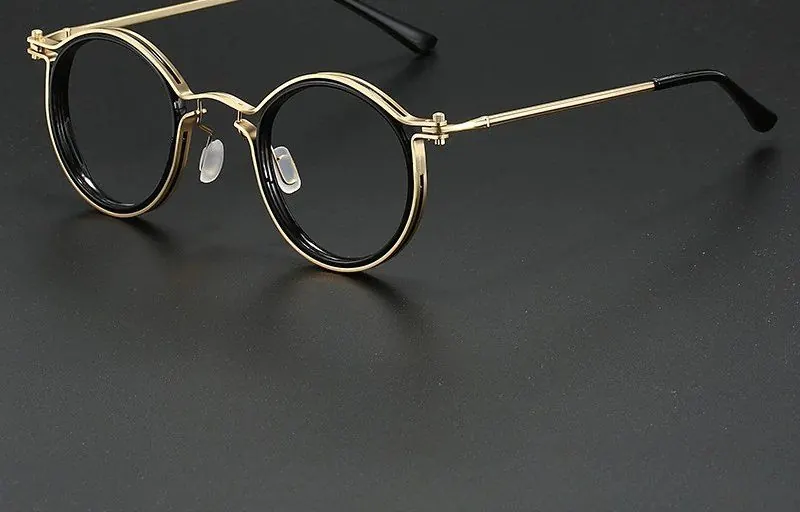
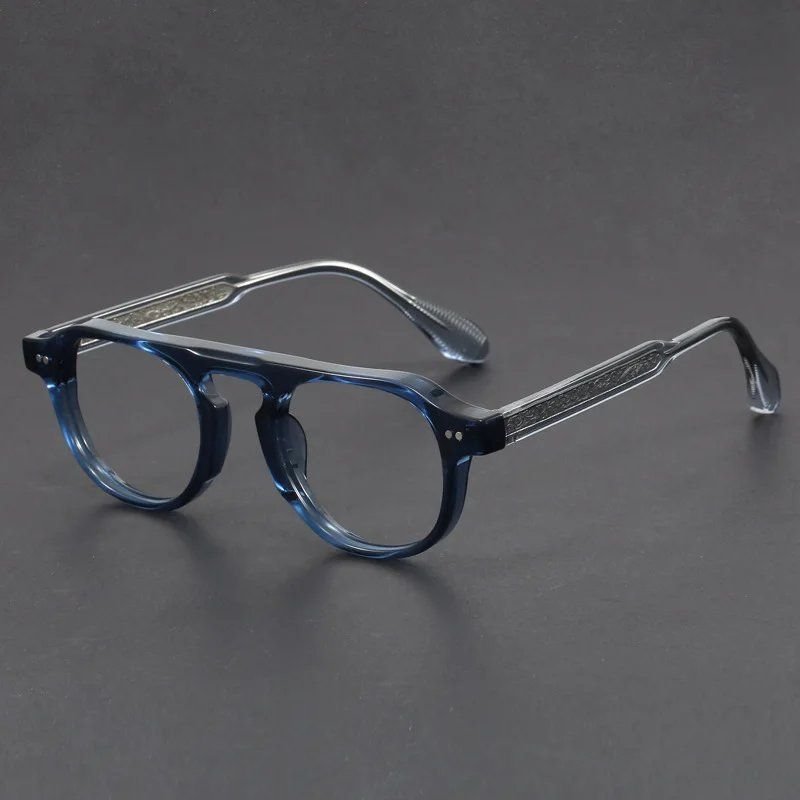
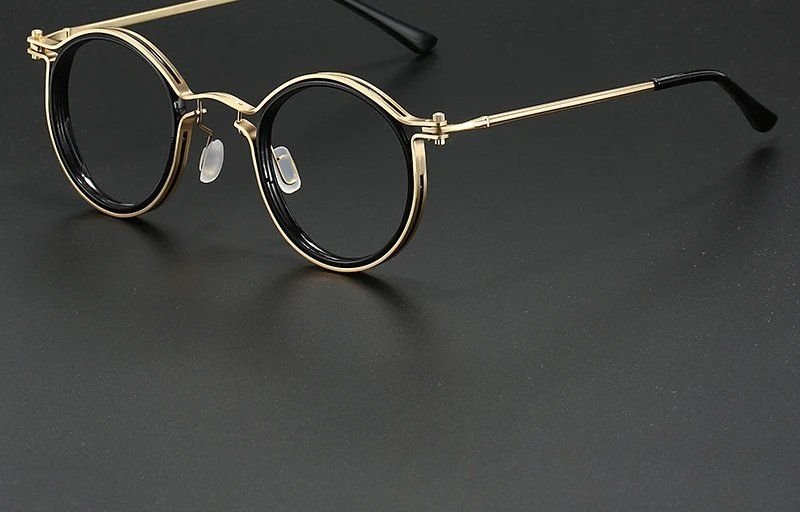
The Navy Keyhole (£27.99) pairs deep navy acetate with a keyhole bridge and engraved silver temples, which is about as polished as eyewear detailing gets. The Black & Gold Round (£20.99) uses exposed bridgework and brushed gold for a vintage feel. For a cleaner, modern take, the Slate Square (£22.99) is a translucent grey that looks substantial without weighing much, and the Crystal Clear (£10.99) adds a flash of silver at the hinge.
All of them are our own designs under our own name, with lenses that filter blue light from screens and cut glare.
When is it worth paying for the label?
When the specific design matters to you and you cannot find that shape anywhere else. That is a perfectly good reason, and so is buying a frame you will wear every day for years, where the cost per wear ends up small.
It is less convincing when the reason is an assumption that a higher price means a better lens, or when you are still working out which shape suits you. In that second case, buying a couple of affordable frames first is the smart move. You learn what you actually reach for each morning, and if you later want to spend more, you spend it on a shape you already know works.
Many people end up with both: one inexpensive everyday pair and one frame they saved up for.
Which shape gives the most designer feel for your face?
The one that fits properly. A beautifully finished frame in the wrong width still looks borrowed, while an affordable frame that lines up with the widest part of your face looks made for you.
As a starting point, round faces suit the structure of a square or browline, square faces soften in a round or panto shape with a keyhole bridge, and oval faces can carry almost anything, including an oversized statement frame. Our guide to round blue light glasses goes into who suits the classic round.
How do you buy stylish frames online without the risk?
Try them at home. Our Home Try-On sends up to four frames for seven days, free, so you can see them in your own mirror, with your own clothes and on your own video calls before you commit.
If you would rather just order, UK delivery is free over £20 (otherwise £5.99), orders are dispatched within 48 hours, and every pair comes with a 30-day money-back guarantee and free returns. For the wider picture on colours, trends and styling, see the fashion edit.
Shortlist by feature, not by brand: write down the two or three details you love about a designer frame, then look for those in our stylish edit.
Frequently asked
Are designer blue light glasses worth the money?
They can be if you love a specific design and will wear it daily for years. If you mainly want the look, the shape and finish are available for much less, and the lens technology is broadly similar across price points.
Are expensive blue light glasses better than cheap ones?
Usually the difference is in the frame rather than the lens. Pricier frames may use denser acetate and better hinges, but blue light filtering and anti-glare coatings are widely available at every price.
What makes glasses look expensive?
Thick polished acetate, a keyhole bridge, metal detailing such as rivets or engraved temples, warm metals like brushed gold, and translucent colours. Two or three of these in one frame will make it read as premium.
Do designer brands sell blue light glasses?
Many fashion eyewear brands offer blue light filtering lenses as an option on their frames. Check the brand’s own site or a stockist for current prices and lens options, as these change regularly.
How can I tell if a frame is good quality?
Open and close the arms to check for a smooth, even hinge, feel for rough edges where the arm meets the front, and see whether the frame sits balanced on your face. Those checks tell you more than a logo.
Can I try designer-style frames at home before buying?
Yes. Our Home Try-On sends up to four frames for seven days free of charge, and any pair you buy has a 30-day money-back guarantee with free returns.
Mentioned above
Frames from this guide
Fashion & How to Style
More from this topic
Cool blue light glasses for 2026
The coolest blue light glasses in 2026 are deeper squares with a flat top bar, translucent crystal and smoke frames.
Read Fashion & How to StyleCute blue light glasses picks
Cute blue light glasses usually share three traits: a softer, rounder lens, a warm or pastel colour and a light frame.
Read